Start with access rules, not the scenery
A route described as a pleasant day walk is not necessarily suitable for a dog. Before making plans, check the land manager’s information for the specific path, not just the wider park or area. Dogs may be welcome on one trail but excluded from another, or required to stay on a leash in particular places. Look for rules covering wildlife habitats, grazing animals, beaches and shared paths, as well as any restrictions that apply to the time you plan to visit.
Think about whether you can follow those rules for the whole walk. A narrow trail beside livestock may be stressful if your dog is easily excited, even when leashed dogs are permitted. If access details are unclear, choose a route with simpler rules rather than assuming that an open gate or a dog-friendly review means you can proceed. Pack a leash even if the route appears to allow dogs off leash; you may need it when passing other people, animals or a road.
Match the distance and shape of the walk to your dog
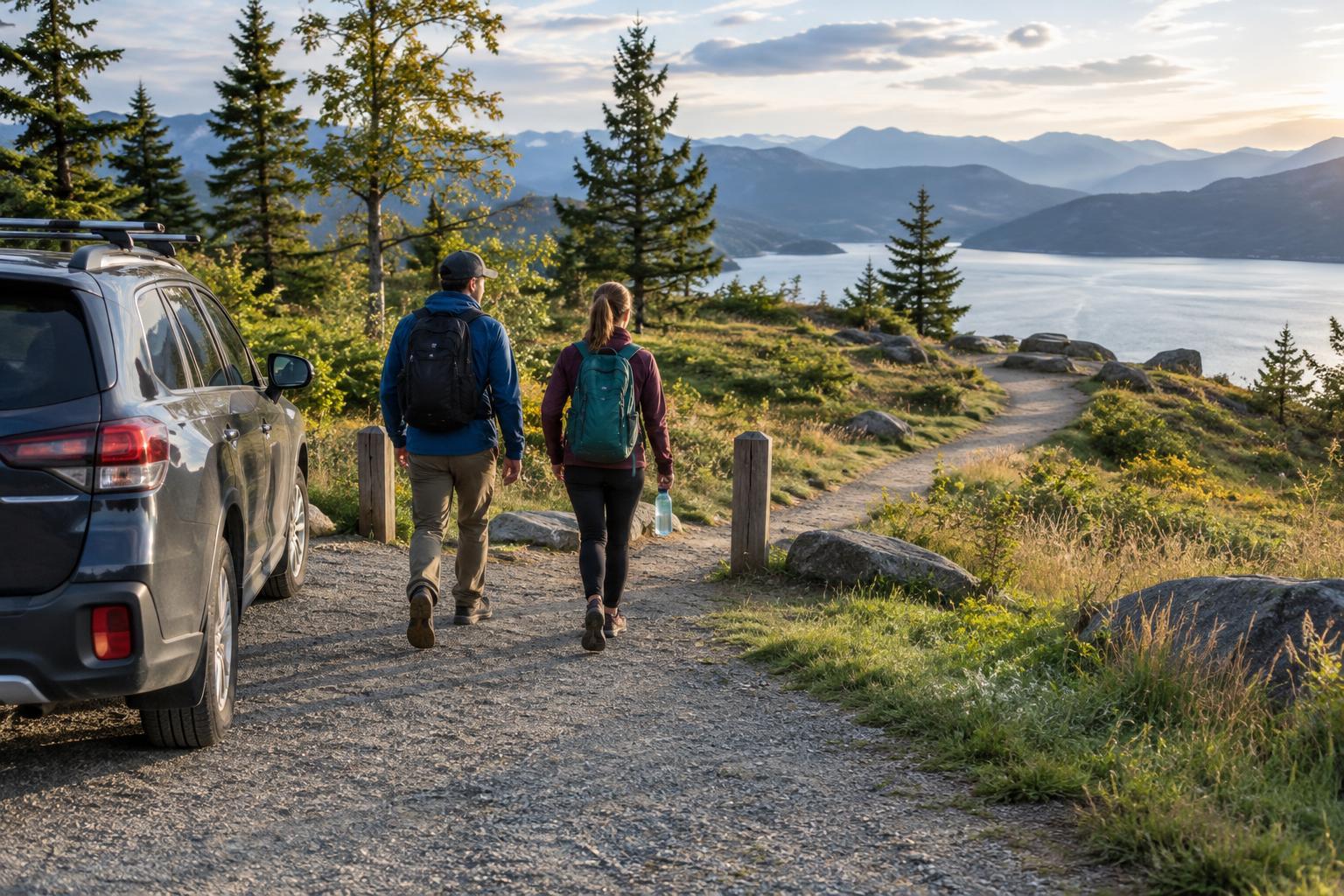
Consider the entire outing, including the walk from the parking area, climbs, uneven ground and the return journey. A short route with steep steps or loose stones can be more demanding than a longer, level path. Estimate how long you will be out at your dog’s comfortable pace, allowing time for sniffing, water breaks and any sections where you need to slow down. If your dog has not done a similar walk recently, start with an easier option instead of treating the route as a test.
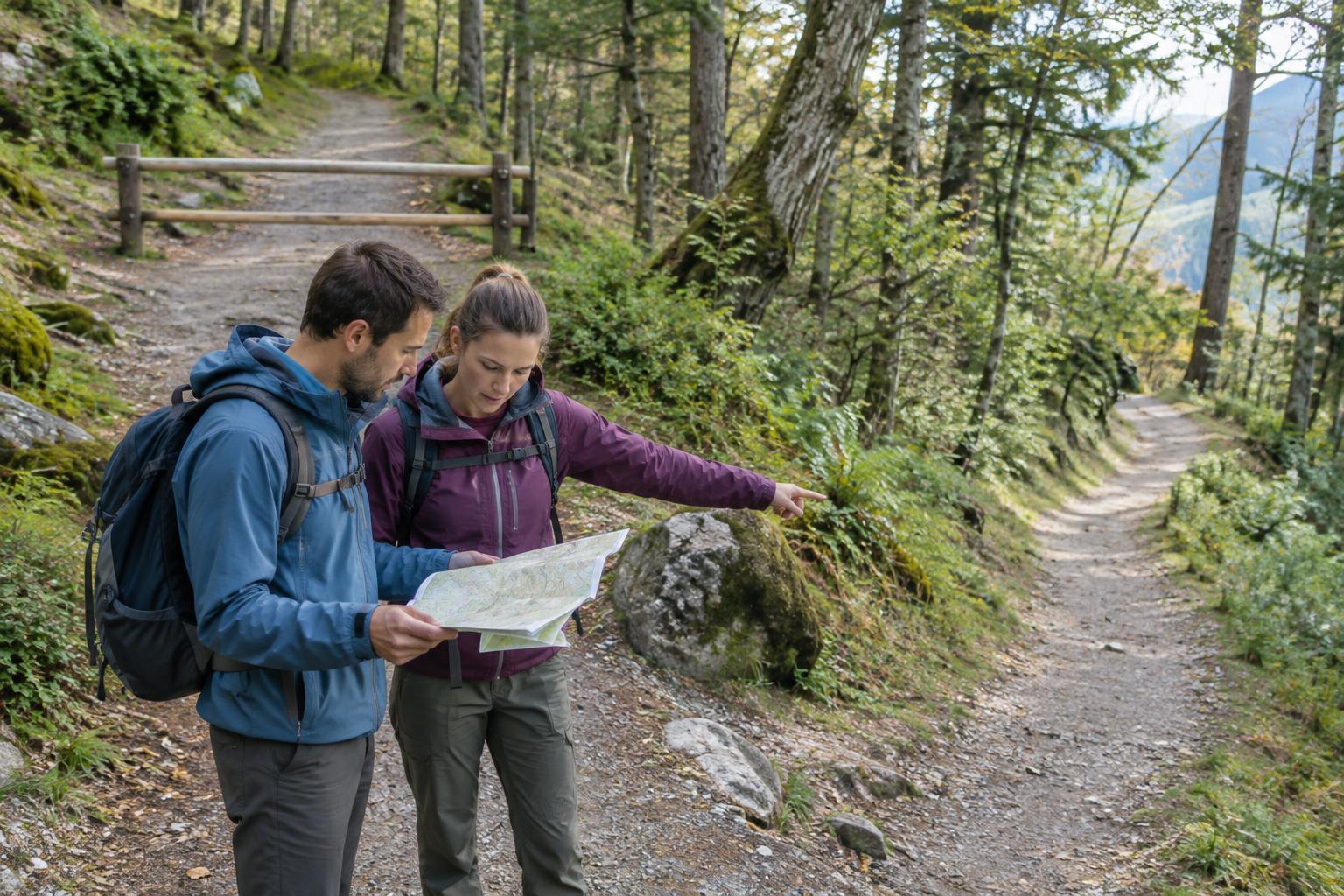
An out-and-back trail lets you turn around, but remember that every step away from the start adds to the distance home. A loop may offer no convenient exit once you pass the halfway point. Look at the map for junctions, nearby roads and possible shorter alternatives. Your dog’s age, fitness and individual needs matter more than what another dog can manage. If you are unsure whether a particular level of exertion is appropriate, ask your veterinarian before planning a demanding trip.
Inspect the ground and nearby hazards
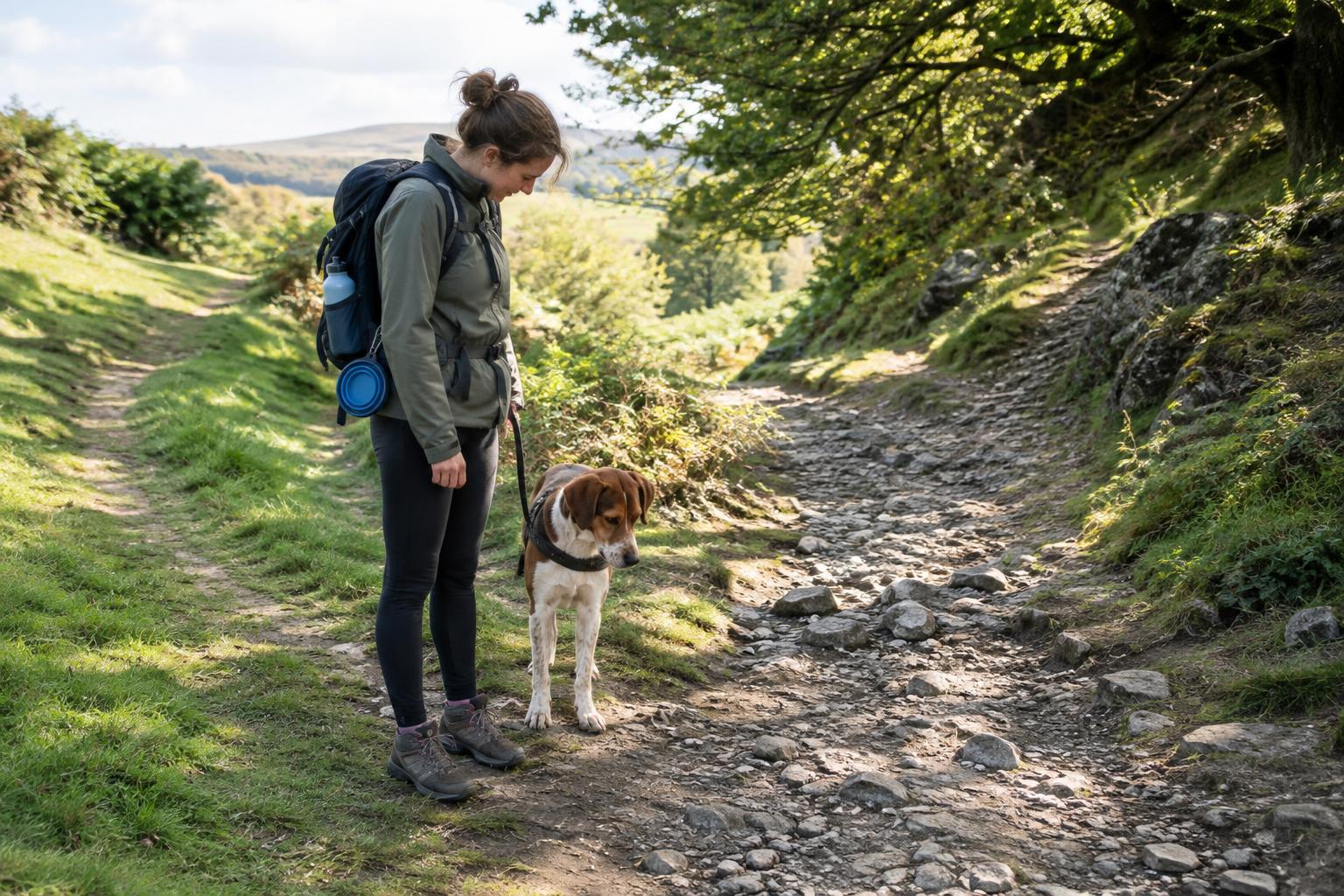
Read route descriptions and look at a map for surfaces your dog will need to cross. Hot pavement, sharp rocks, coarse gravel and long stretches of rough ground may be uncomfortable for paws. Steep scrambles, ladders, stiles and exposed ledges can be difficult or unsafe for a dog even when they are manageable for a person. Pay particular attention to obstacles you cannot easily bypass or help your dog over. A path that requires you to lift your dog repeatedly may not be a practical choice.
Check for road crossings, fast-moving water and places where a leash could become tangled. Shared trails also need consideration: a dog that struggles around bicycles, horses or crowds may have a better day on a quieter route. You do not need to eliminate every surprise, but you should know where the obvious pinch points are and have a plan for passing them calmly.
Check conditions and what you can carry
Weather can change how suitable a familiar route feels. An exposed climb offers little shade on a warm day, while rain can make stone steps and steep paths slippery. Wind and cold may also make long stops less comfortable. Check the forecast and consider the route’s shade, shelter and surfaces at the time you expect to walk. If conditions look difficult, choose a shorter, more sheltered path or go another day.
Bring enough water for both you and your dog rather than relying on streams, puddles or taps that may not be available or suitable. Take a bowl or another practical way to offer water, along with waste bags and a plan to carry used bags until you find an appropriate bin. For a longer outing, pack the supplies your dog normally needs. Your bag should still be comfortable to carry: if the route requires more than you can reasonably bring, that is a reason to reconsider it.
Make the final decision on the trail
A route can look suitable on paper and still feel wrong when you arrive. Before setting off, take a moment to check the posted signs, the condition of the path and how your dog responds to the surroundings. Begin at an easy pace. Offer breaks, watch for changes in your dog’s usual movement or willingness to continue, and do not wait until you reach a planned viewpoint to turn back.
The best dog-friendly walk is one you can both complete comfortably while respecting the place and other trail users. Keep your return option in mind, use your leash when needed and treat a shorter walk as a successful change of plan. Choosing the route your dog can enjoy today leaves you both better placed for the next adventure.