Start with your own requirements
An accessible walk is not one fixed type of route. A firm gravel path may work well for one person but be difficult for someone using a small-wheeled mobility aid. A short hill may be manageable for one walker and exhausting for another. Before comparing routes, note the conditions that matter to you or your group: surface firmness, maximum comfortable slope, space to turn, opportunities to rest and distance between stopping points.
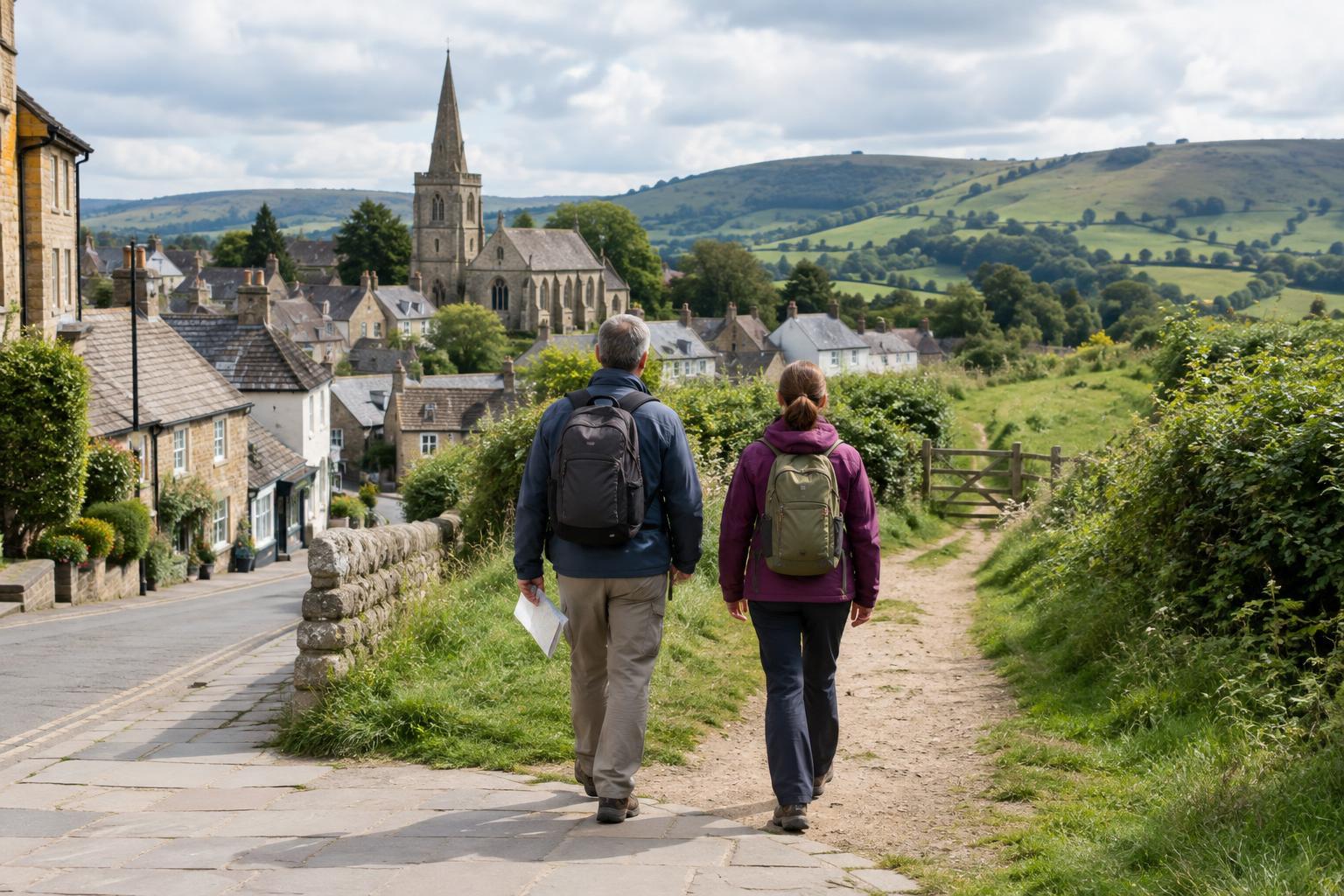
Think about the whole outing, not just the trail. A route is less useful if reaching its start involves steps, an uneven parking area or a long walk from public transport. Decide how far you want to travel before reaching the path and what would make it easy to shorten the walk. These details help you assess route descriptions without relying on broad labels such as “easy” or “family-friendly.”
Read surface descriptions closely
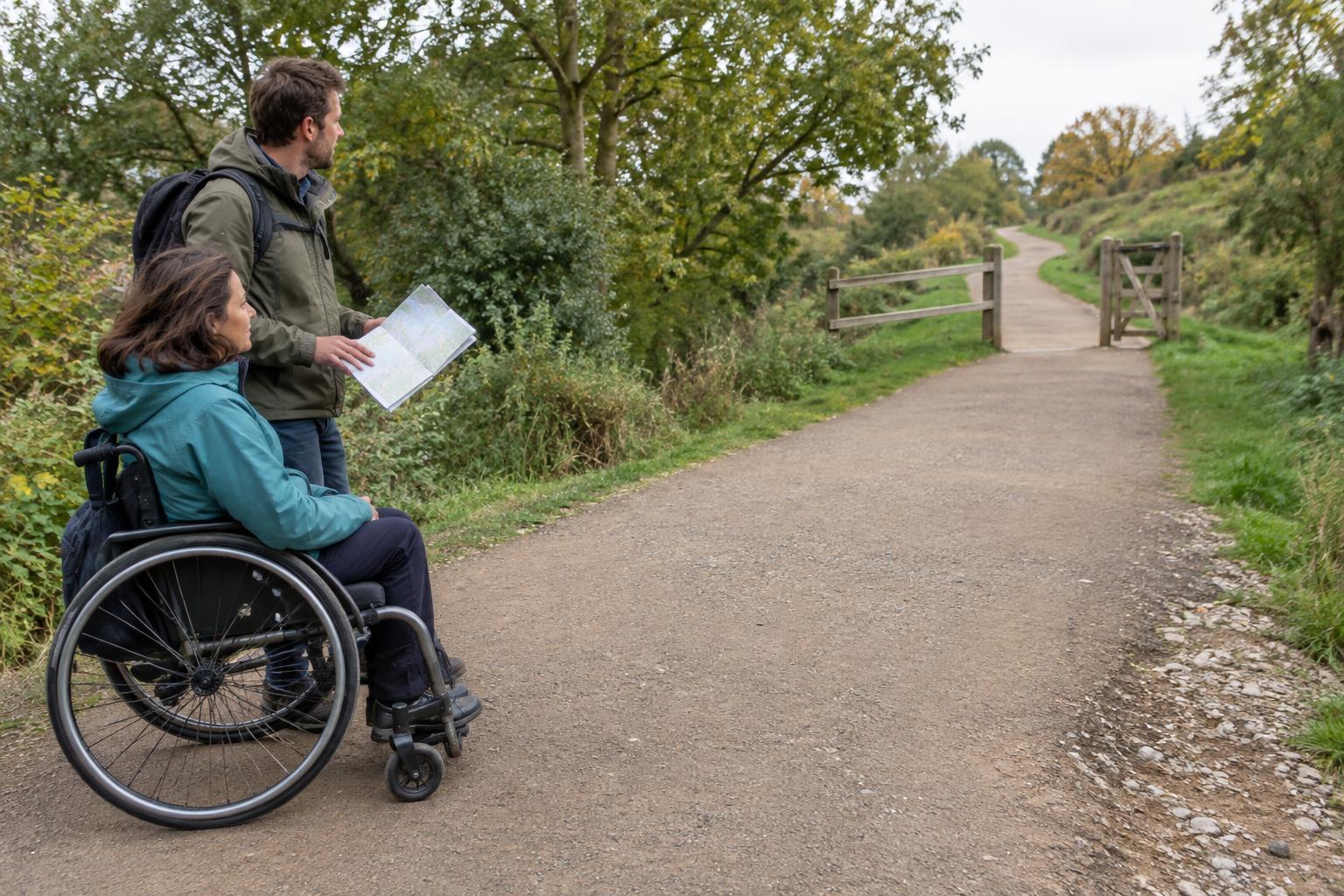
Look for specific descriptions of what is underfoot. Paving and well-maintained, compacted paths may offer a more predictable surface than loose stones, deep gravel, sand, mud or grass. The condition can change along a route: a smooth entrance might lead to a rough wooded section or a worn patch around a viewpoint. Roots, ruts, drainage channels and raised edges can also matter, even when they appear only briefly.
Consider how conditions might change on the day. Rain can soften earth and create puddles that hide holes; dry spells can leave loose material on slopes. Fallen leaves may obscure the path edge. Recent photos can be helpful, but they may not show the narrowest or most uneven section. If a route description does not say whether a path is firm and continuous, treat that as an unanswered question rather than assuming it is suitable.
Check slopes, width and physical barriers
A route’s total distance rarely tells you enough about effort or maneuverability. Check for sustained climbs, steep short ramps and sideways slopes that could make it difficult to maintain a comfortable line. A narrow path may also leave little room to pass other walkers or turn around. Where available, look at a route map alongside descriptions or photos, keeping in mind that maps may not show every small change in level.
Pay particular attention to gates, stiles, steps, bridges and crossings. A gate might have a heavy latch or limited clearance; a bridge could have raised edges or an awkward approach. At road crossings, consider visibility and whether there is a dropped kerb where you need one. If a barrier is essential to completing a loop and you cannot confirm that it works for your group, choose a route with a known alternative.
Look for useful details at the start and along the way
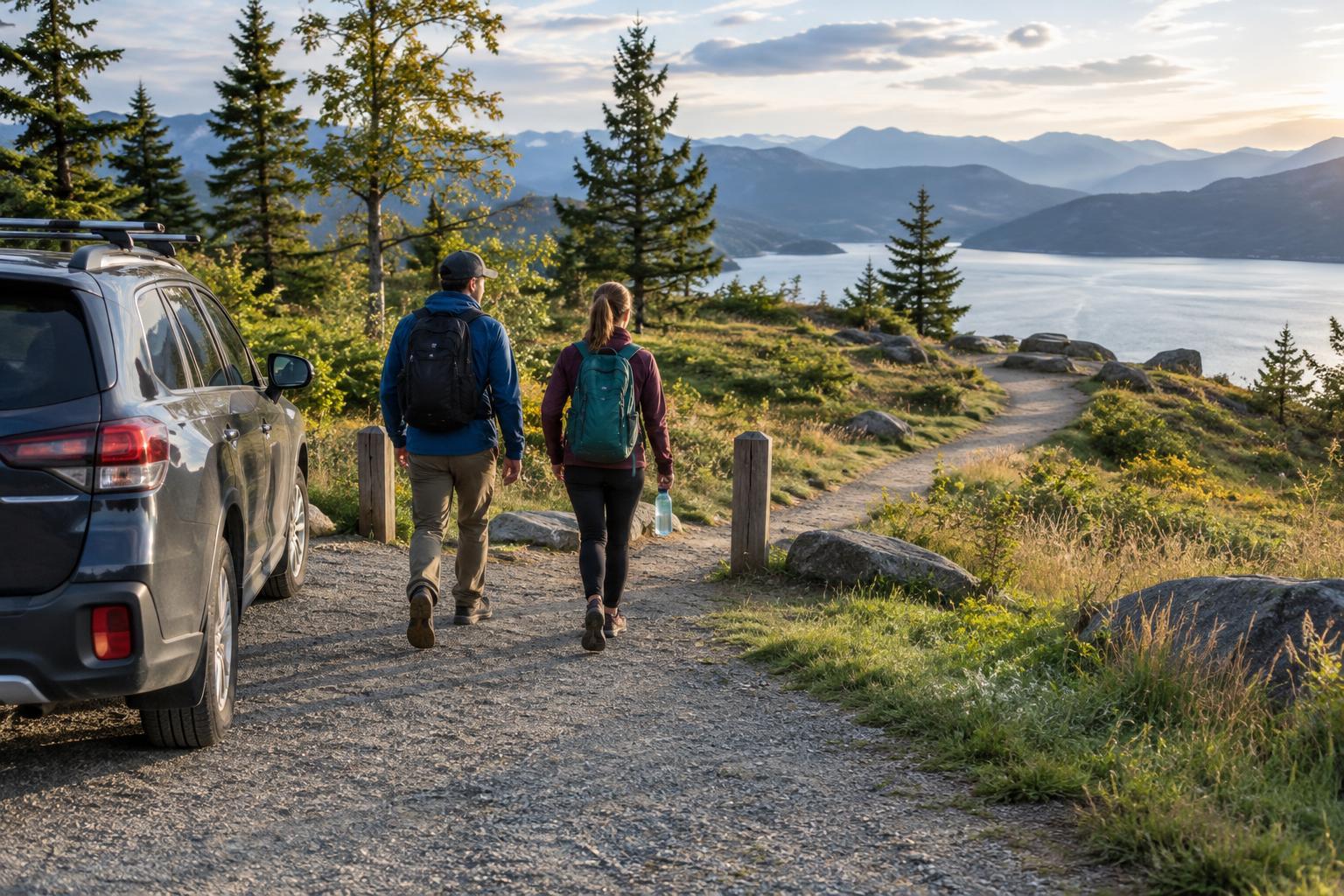
Check how the route begins. Is the entrance easy to identify, and is there enough level space to get ready without blocking the path? If you are arriving by car, find out whether the surface between parking and the trail is manageable. If you are using public transport, include the journey from the stop in your assessment. Facilities are worth checking separately: the presence of a café or toilet nearby does not tell you whether it meets your access needs.
Rest points can make a longer walk more practical, but do not assume benches will be evenly spaced or usable for everyone. Shade, shelter and places to pause off the main path may also affect comfort. For a group with different needs, identify a shorter option or a clear turning point in advance. An out-and-back walk can be simpler to adapt than a loop if conditions become more demanding than expected.
Confirm uncertainties and keep the plan flexible
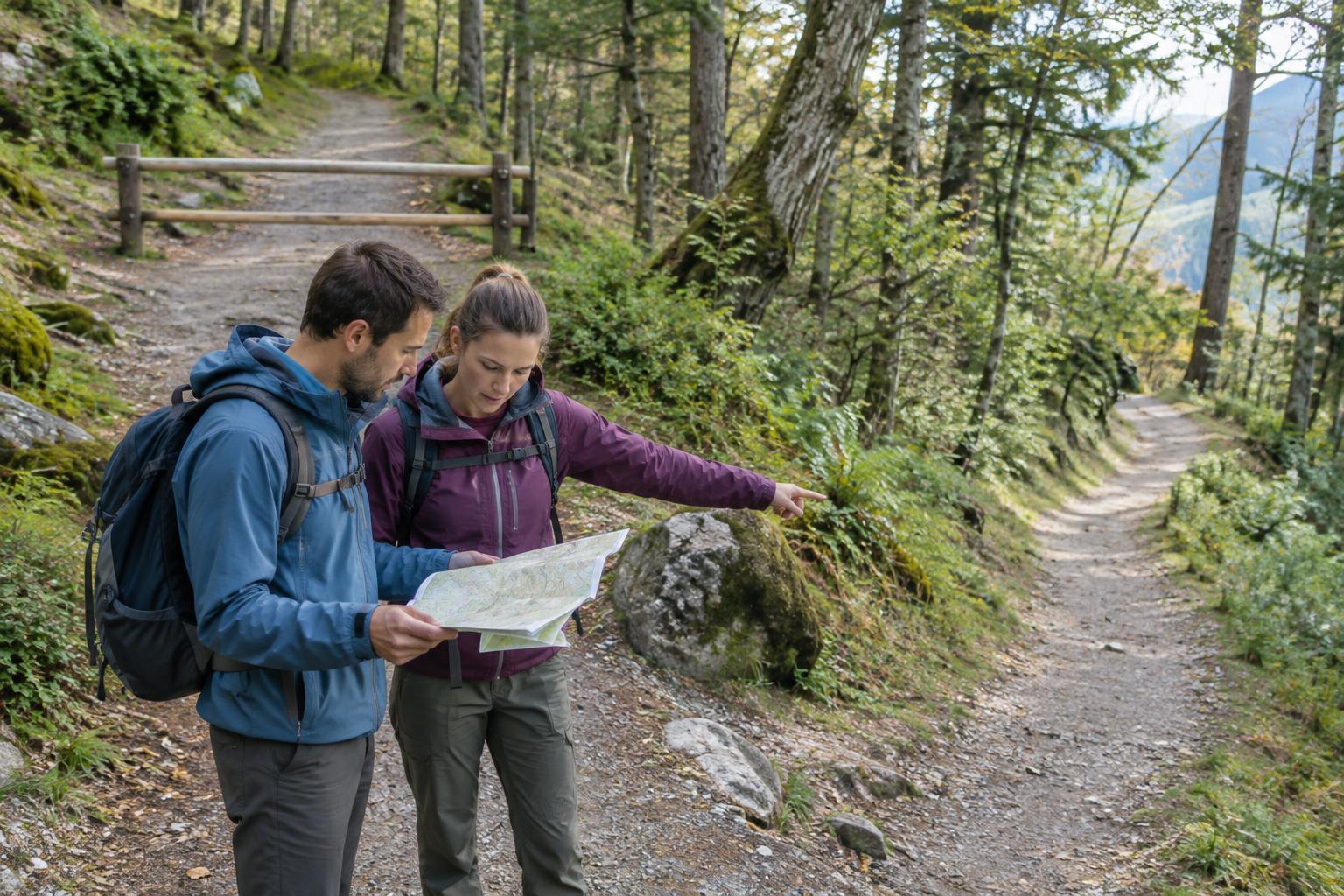
Gather information from route descriptions, maps and photos, then write down what is still unclear. If a park or route operator can be contacted, ask focused questions: Is the entire path surfaced? Are there steps at either entrance? Can a gate be opened without leaving the path? Is there a narrow section or a steep slope? Specific answers are more useful than a general assurance that a walk is accessible.
Before setting out, share the route and intended return time with someone you trust, and bring what you normally need for a comfortable day trip. At the trail, take a moment to check the entrance rather than feeling committed to the full walk. Conditions can differ from descriptions, and turning back is a sensible choice when a surface or barrier does not work for you. A good route is one that lets you enjoy the outing on your own terms.