Pause before you reach the water
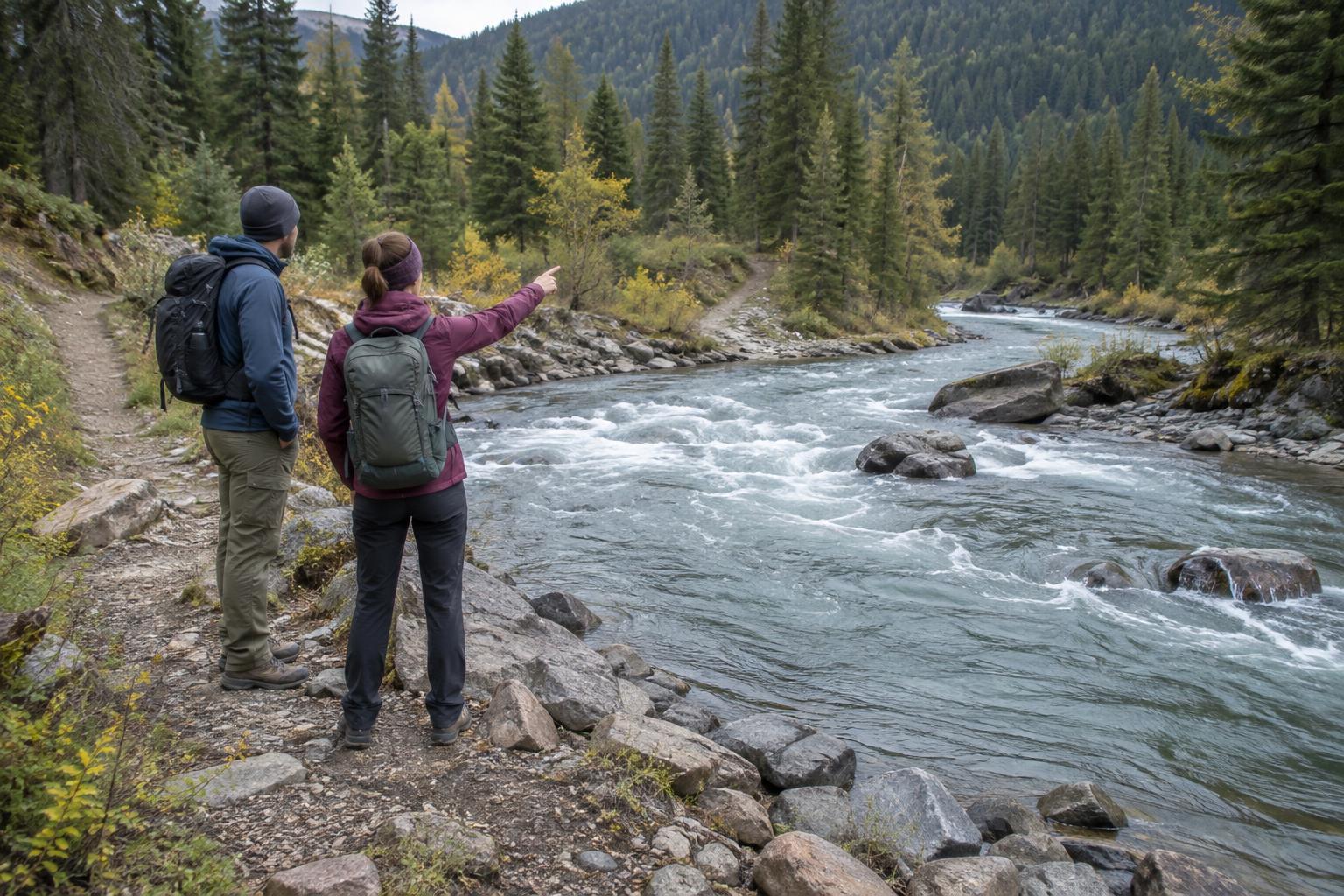
A stream crossing begins with a decision, not a step into the water. Stop on stable ground and look at the whole scene. Is there a maintained bridge nearby? Does your route offer another crossing farther along, or can you return the way you came? A line on a map does not tell you whether a crossing is safe today, so treat what you can see on the ground as more important than the route you planned.
Give yourself time to observe. Rainfall can raise water levels, and a stream may continue to rise even when it is not raining where you stand. Look for water spreading beyond its usual banks, branches or debris moving in the current, and signs that the banks are being undercut. If conditions are changing or you cannot judge them confidently, do not enter.
Look beyond the spot where you would step in
Assess the water and where it would carry you if you slipped. Fast current, cloudy water that hides the bed, uneven footing and a steep exit bank all make a crossing harder to judge. Cold water can also make it difficult to move steadily. Do not assume a narrow channel is easy: water forced through a small gap may move quickly.
Look downstream for rocks, fallen trees, deep pools, steep drops or bends where the current presses against a bank. Those hazards matter even if the entry point looks gentle. Check both banks as well. You need a clear, stable place to leave the water, not just an easy way in. If you cannot see a safe exit, or the consequences of a slip look serious, turn back.
Consider the people, not just the stream
A crossing that one walker finds manageable may be too demanding for another. Think about everyone’s balance, energy, footwear and comfort in moving water. A heavy pack, tired legs or a person carrying a child can change the decision. Keep the group together while assessing the site, and make space for anyone to say they are not comfortable crossing.
Avoid letting a schedule decide for you. Being close to a destination, expecting an easier return trip or wanting to keep up with others does not make the water safer. If someone would need to be persuaded into crossing, choose another route. Turning around early usually leaves more time and energy than retreating after conditions worsen.
If you decide to cross, keep the decision reversible
Only consider entering where the water appears shallow and slow, the bed and exit are visible, and a slip would not carry you toward a serious hazard. Secure loose items so they do not affect your balance, but keep any pack easy to remove if you fall. Face upstream and move slowly, testing each foothold before shifting your weight. A walking pole may help you feel for footing, but it cannot make a hazardous crossing safe.
Do not jump between wet rocks or rely on a single stone that might shift. Avoid linking people together with a rope or strap; if one person falls, others may be pulled in. If the bottom proves less stable, the current feels stronger than it looked, or anyone becomes uncertain, return to the bank you started from while you still can. There is no need to complete a crossing simply because you began it.
Make turning back part of the plan
Before a walk, check whether the route includes an unbridged stream and identify a reasonable alternative or turnaround point. Allow enough time to retrace your steps. Waterproofing essentials and carrying an extra layer can make an unexpected change of plan more comfortable, but neither replaces a safe route.
At the water, turn back if it is rising, fast, opaque or too cold to move through comfortably; if footing or the far bank is uncertain; or if downstream hazards leave little room for a mistake. Turn back, too, when the group cannot agree that the crossing is manageable. A successful day trip is one everyone can finish safely, even when the route changes.