Start with the walk, not the label
A recreational day trip might follow a smooth park path, a muddy woodland trail or a rocky hillside. Those walks ask different things of your footwear. Hiking boots and trail runners are both reasonable options, but neither is automatically safer or more comfortable for every person and route.
Before choosing, picture the ground you expect to cover. Think about how much of the walk is paved, how often you may encounter loose stones or roots, and whether rain could leave the path wet. Consider your pace and what you will carry, too. A light bag on a familiar loop may call for less structure than a full daypack on uneven ground. The aim is to match the shoe to the trip without overlooking fit.
Where hiking boots can help
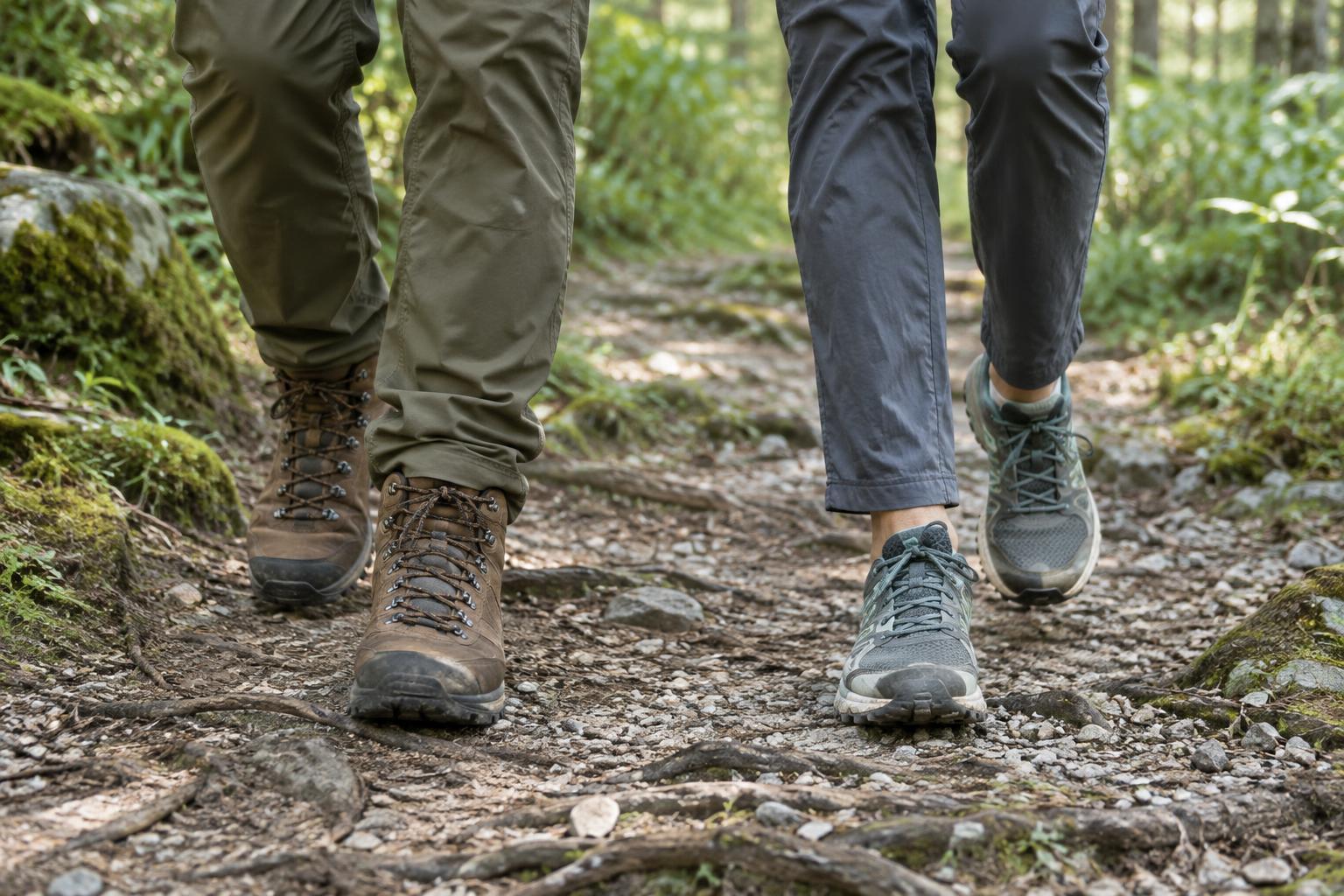
Hiking boots usually have a more structured upper and sole than trail runners. That structure can feel reassuring on rough ground, particularly when sharp stones or uneven surfaces make a flexible shoe tiring to wear. Some boots also have higher collars that help keep out debris and shallow splashes. Waterproof models can be useful in wet grass or sustained rain, provided water does not enter over the top.
The trade-offs are worth noticing. Boots often weigh more and may feel warmer, especially in mild weather. A waterproof boot that gets wet inside can be slow to dry. A higher collar does not guarantee that you will avoid a twisted ankle; traction, footing, fatigue and personal stability still matter. If a boot feels stiff or rubs in the shop, do not assume a long walk will fix the problem.
Where trail runners can help
Trail runners often feel lighter and more flexible. Many people find them pleasant for established trails, mixed pavement-and-dirt routes, and days when they want an easy walking stride. Breathable versions may feel less clammy in warm conditions and can dry more readily after a brief soaking than heavily padded footwear.
Their flexibility also means you may feel more of the ground beneath your feet. That can be welcome on smooth paths but tiring on long stretches of angular rock. Low-cut uppers offer less of a barrier against mud, grit and water entering from above. Trail runners vary considerably: a pair made for soft ground may have a different tread from one intended for firm paths. Look at the sole and the route rather than relying on the category name alone.
Fit and grip matter in either style
A well-fitting trail runner is usually a better day-trip choice than a boot that pinches, and the reverse is also true. Try footwear with the socks you plan to wear. Your heel should feel secure without painful pressure, and your toes should have room when walking downhill. Check for rubbing around the heel, sides of the foot and top of the toes. If possible, walk on an incline or stairs before deciding.
Pay attention to the outsole as well. Tread that grips a dry shop floor may behave differently on wet roots, smooth rock or deep mud. No sole grips every surface equally, so slow down where footing is uncertain. Whatever you choose, wear the pair on shorter local walks before taking it on an all-day route. This gives you time to notice pressure points and adjust socks or lacing.
A simple way to choose for your next outing
For a mostly dry route on maintained paths, comfortable trail runners may be all you need. For a rocky, muddy or persistently wet route, boots may be more comfortable if you appreciate a firmer sole or more coverage. These are starting points, not rules. Someone accustomed to trail runners may prefer them on a rough walk, while someone else may enjoy boots on an easy one.
If you already own a suitable pair, test it before buying something new. Check that the tread is not worn smooth, the sole is attached securely and the footwear still fits with your walking socks. After each trip, brush off grit and let the pair dry away from direct heat. The best choice for a day walk is the one that fits your feet, suits the expected conditions and lets you concentrate on the route rather than your footwear.