Start with a quick inspection
A headlamp can spend weeks in a pack and then become essential when a walk takes longer than expected. A short check before each trip is more useful than discovering a problem in the dark. Switch it on, try its usual brightness settings, and look for flickering or unexpectedly dim light. Check that the strap, battery cover, and any charging port cover are secure.
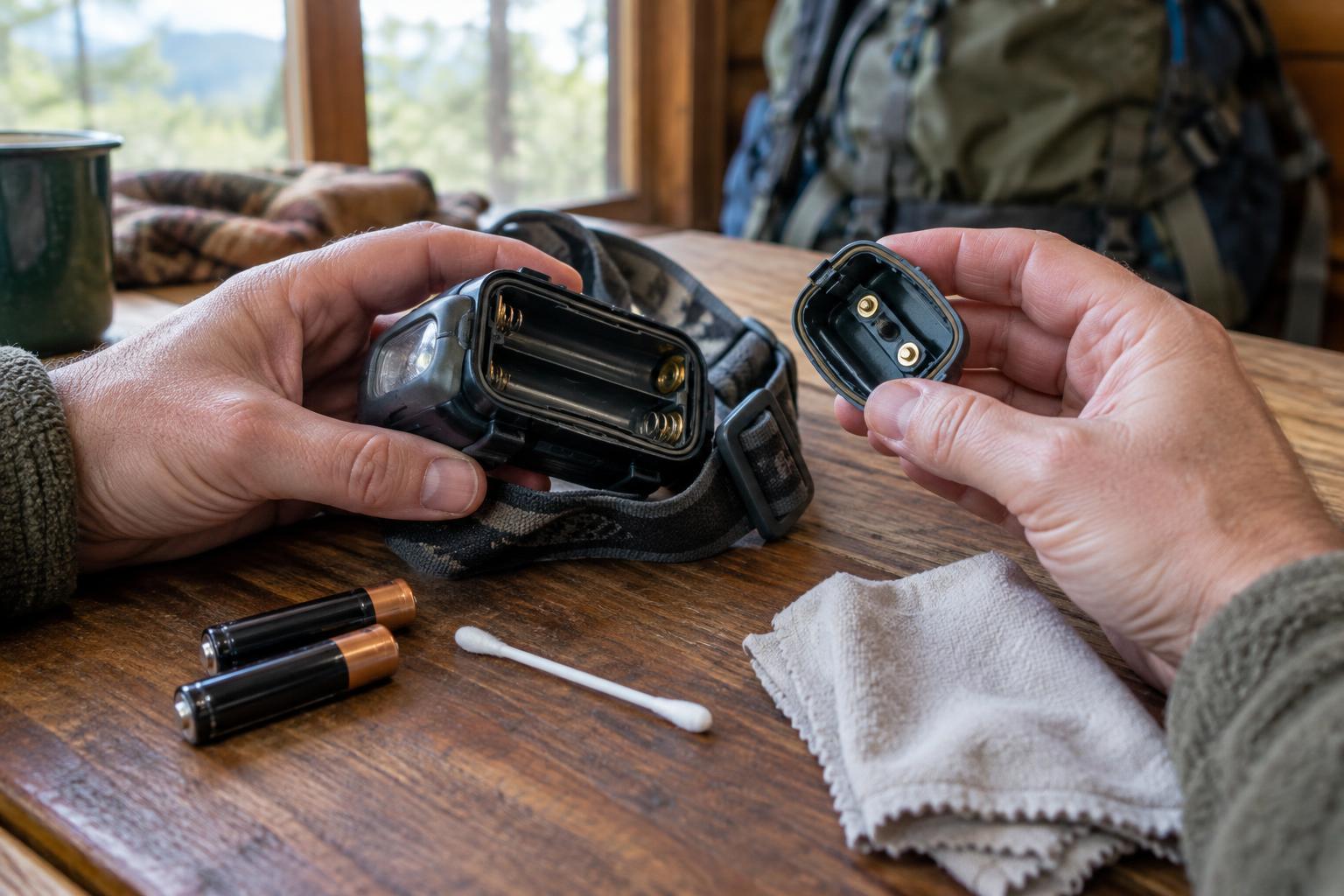
Open the battery compartment with the lamp switched off. Look for dust, moisture, bent springs, or a white or greenish deposit on the metal contacts. Check any gasket around the cover for grit or damage; a dirty seal may not close as intended. If the compartment is wet, let it dry fully before fitting batteries or switching the lamp on.
Clean contacts gently
Remove replaceable batteries before cleaning. For a lamp with a built-in battery, switch it off and follow its care instructions rather than trying to open a sealed housing. Use a dry cotton swab or soft, lint-free cloth to lift ordinary dust from accessible contacts. A clean, soft brush can help around a spring. Avoid sharp tools and aggressive scrubbing, which can damage a thin metal coating or bend a contact.
If you see a small amount of residue from a leaking battery, avoid touching it with bare hands. Remove the battery carefully, keep the residue away from your eyes, and consult the lamp and battery makers’ cleaning guidance before using any liquid. Do not soak the compartment or let cleaning fluid run inside the lamp. If a battery is swollen, hot, heavily leaking, or stuck, stop using the headlamp rather than forcing it out. Extensive corrosion or damaged contacts may mean the lamp is no longer reliable for a trip.
Choose and fit batteries with care
Check which battery types your headlamp accepts. Some models use disposable cells, some use a dedicated rechargeable pack, and others support more than one option. A battery that fits physically is not necessarily suitable electrically. Follow the markings inside the compartment and the maker’s instructions, especially if you are considering rechargeable cells in a lamp normally used with disposable ones.
For replaceable cells, fit them in the marked direction and close the cover without forcing it. Avoid mixing old and new cells or combining different types in the same set. Never try to charge a disposable battery. If a lamp flickers after you fit fresh batteries, reopen the compartment and check their orientation, the cover, and the contacts before assuming the lamp has failed. Dispose of spent or damaged batteries through an appropriate local collection route.
Manage charging and storage
Charge a rechargeable headlamp before a trip using the method specified for that model. Make sure the charging port and plug are clean and dry before connecting them. A charging indicator is helpful, but a brief lighting test afterward confirms that the lamp responds as expected. For longer outings, consider how you will provide backup light: a second small lamp may be simpler than relying on a battery pack that your headlamp cannot use.
Between trips, store the lamp somewhere dry and away from excessive heat. If a headlamp uses removable disposable batteries and will sit unused for a long time, taking them out reduces the chance that a leak will damage the contacts. For a rechargeable model, follow its storage and charging guidance rather than leaving it indefinitely on a charger. Keep loose spare batteries protected so their terminals cannot touch metal objects.
Build a simple pre-trip routine
Before packing, give the lens a wipe with a soft cloth, check that the cover closes properly, and run the lamp for a few minutes on a setting you expect to use. Confirm that the strap adjusts comfortably over a hat or hood if needed. Pack the lamp where you can reach it without emptying your bag; a working light is less helpful if it is buried beneath everything else.
After a muddy or rainy outing, wipe down the outside and let the lamp dry before storing it. Check the compartment again if you suspect water got in. These small habits cannot prevent every failure, but they make common problems—flat batteries, dirty contacts, and a poorly closed cover—much easier to catch while you still have daylight.