Start with the tasks your hands need to do
The best handwear for a cold walk depends on more than the temperature. Think about how often you will use a phone, adjust a backpack strap, open a snack or handle a map. Gloves give each finger its own space, making these small tasks easier. Mittens group most fingers together, which generally helps them retain warmth but makes fine movements harder.
For a short walk with frequent stops to take photos or manage gear, gloves may be the more convenient choice. For a steady walk where your hands can stay tucked away, mittens may feel more comfortable. If you know your fingers get cold easily, prioritize warmth and plan how you will handle occasional fiddly tasks rather than choosing thin gloves solely for convenience.
Why mittens often feel warmer
In a glove, fabric separates every finger and exposes more surface area to the cold. In a mitten, fingers share an insulated space. That difference can make a noticeable change in comfort, especially when you are walking at an easy pace or standing still for a break. A mitten is not automatically warmer than every glove, though: insulation, wind protection, dryness and fit also matter.
Your pace changes what feels right. Hands that are comfortable while climbing a hill may cool quickly when you pause at a viewpoint. A warm pair kept in your bag can be useful even if you start out in lighter gloves. Pay attention to how your hands feel during stops, not just during the most active part of the walk.
Build a simple handwear system
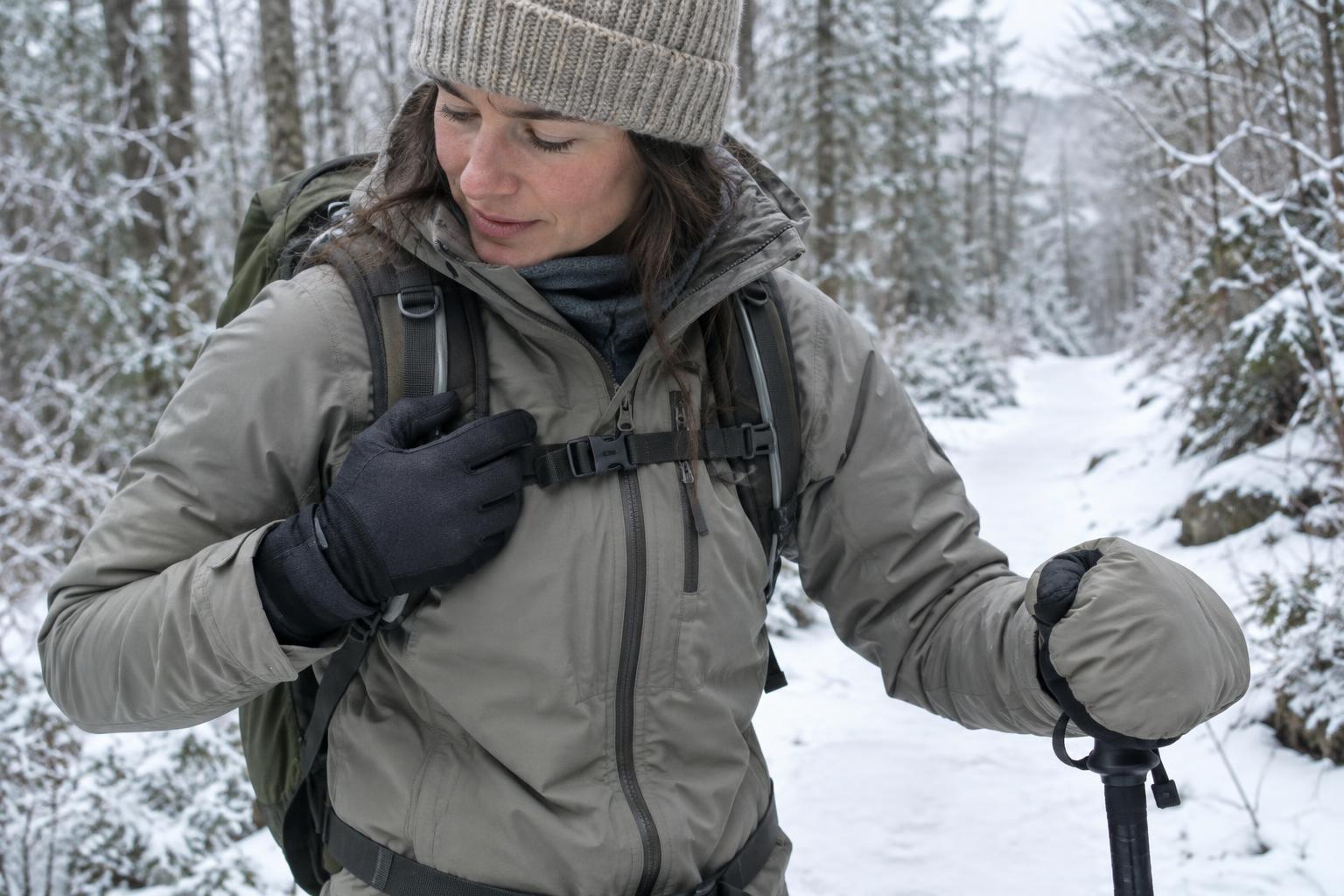
A light liner glove under a roomier mitten or shell can offer a useful middle ground. The liner lets you briefly remove the outer layer to do a task without exposing bare skin. For mild, dry conditions, a liner or lightweight glove may be enough on its own. In stronger wind, an outer layer that blocks moving air can make a bigger difference than adding thickness alone.
Wet conditions call for a different priority: keeping insulation dry. Some shells are designed to shed rain or snow, while others will soak through. Check what your handwear is made to handle, and avoid assuming that a thick knitted glove will protect you in prolonged wet weather. A spare dry pair stored in a bag or waterproof pouch can be more useful than a single heavy pair that stays damp for the rest of the walk.
You do not need an elaborate collection to start. A comfortable everyday glove and a warmer, weather-appropriate option cover many recreational walks. Add liners or shells if you find yourself regularly switching between active walking, exposed stretches and long stops.
Check the fit before you head out
Try handwear on with any liners you intend to use. You should be able to move your fingers easily without the fabric pulling tight. A snug cuff helps limit drafts, but the whole setup should not squeeze your hands. Tight layers can leave little room for insulating air and may feel uncomfortable as you move.
Test ordinary walking tasks while wearing your chosen setup: grip a trekking pole if you use one, pull a zipper and take something out of a pocket. If you must remove your handwear every few minutes, consider a more dexterous glove or a liner-and-mitten combination. If your hands cool whenever you stop, choose a warmer outer option. Adjustable cuffs and simple pull tabs can also make changes easier when your fingers are already cold.
Keep warmth working throughout the walk
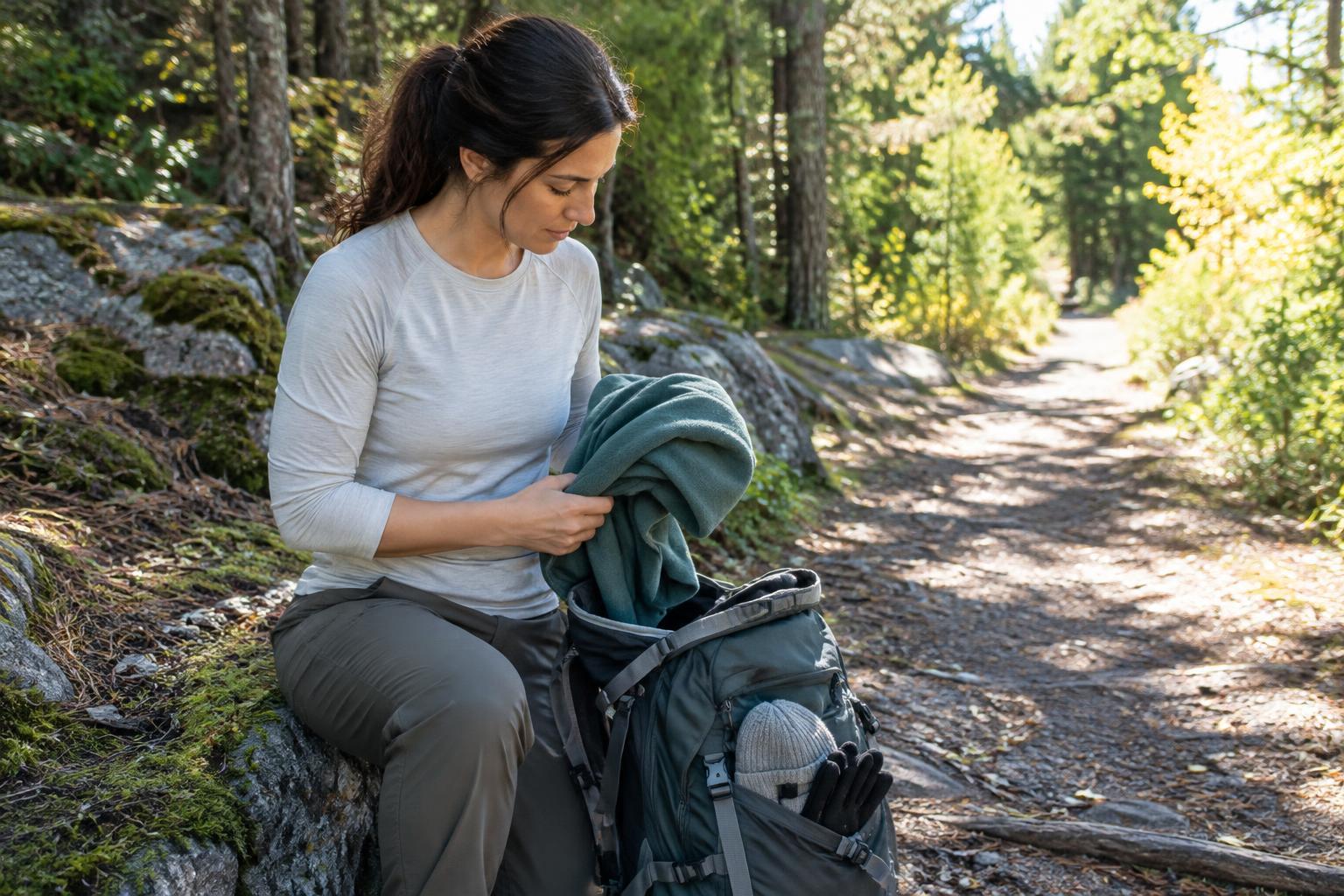
Start with dry hands and carry handwear where you can reach it before your fingers become uncomfortably cold. Keep a spare pair protected from moisture rather than loose in an exposed pocket. When you stop for a break, put your warmer layer on early; it is easier to hold on to warmth than to warm up hands that have already become very cold.
After the walk, air-dry damp gloves or mittens according to their care instructions. Avoid leaving them crumpled in a bag, where moisture can linger. Before the next outing, check cuffs, seams and any closures for wear. The practical choice is the pair—or combination—that stays dry enough, fits well and lets you do what your particular walk requires.