Start with how you will use them
Trekking poles are not essential for every walk. On a level path, you may be happier keeping your hands free. They become more appealing when a route includes loose ground, long descents, stream crossings or stretches where you want an extra point of contact. For a casual walker, the best poles are the ones that are comfortable enough to use and convenient enough to bring.
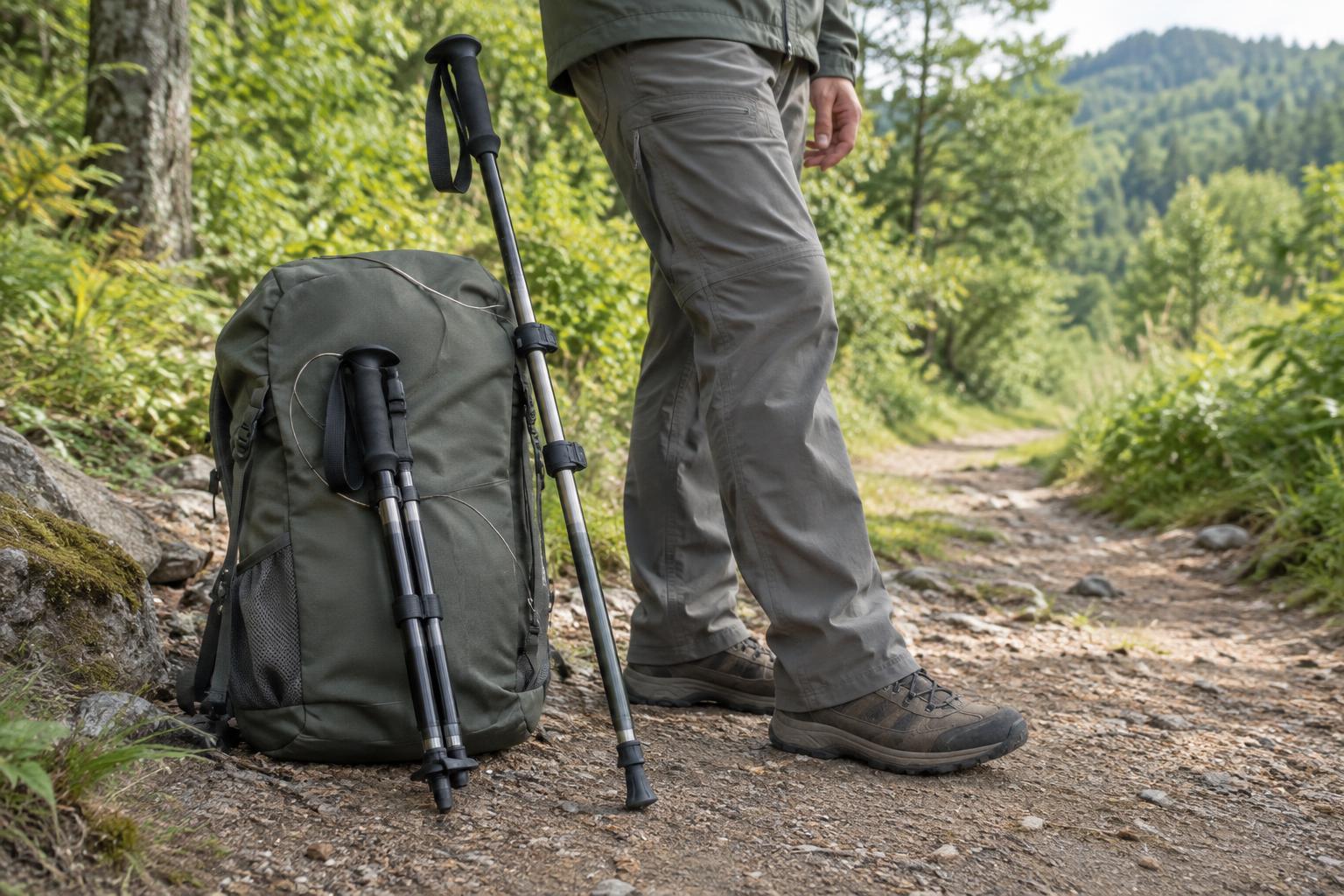
The main difference is how they shorten for transport. Folding poles separate into connected sections that fold into a compact bundle, much like tent poles. Telescopic poles have nested sections that slide into one another and lock at the chosen length. Both designs come in a range of materials, grips and prices, so judge the construction of a particular pair as well as its folding style.
When folding poles make sense
Folding poles are useful when you expect to carry your poles more often than you use them. Their short packed length can fit neatly in a daypack or travel bag, depending on the model. That makes them appealing for trips that mix walking with trains, cafés or sightseeing. Many deploy quickly once you have practiced, although the exact setup varies.
Their trade-off is fit. Some folding poles have a fixed working length; others include a short adjustable section. If you want to change pole length substantially between users or terrain, check the available range before buying. Also look at how firmly the sections seat together and whether the tensioning mechanism is easy for you to operate. A compact bundle is less helpful if setup feels fiddly when your hands are cold or damp.
When telescopic poles make sense
Telescopic poles are a straightforward option if adjustability matters most. You can set them to a comfortable height, shorten them for an uphill stretch or share them with someone of a different height. Many have visible length markings, which make it easier to return both poles to the same setting. External lever locks are generally easy to see and operate; twist-lock designs may feel tidier but require you to check that each section is secure.
The compromise is packed length. Telescopic poles usually remain longer when collapsed than comparable folding poles, so measure your bag or check its external attachment points. Never assume a pole will fit inside your daypack just because a product description calls it compact. If you mainly walk from your front door or car and leave the poles extended for the whole outing, their longer collapsed size may not matter.
Compare comfort, grip and trail details
Whichever style you choose, try setting a pole so your elbow bends comfortably when its tip rests near your foot on level ground. Treat this as a starting point rather than a rule: a small adjustment may feel better on a climb or descent. Hold the grip for a few minutes and check whether the shape suits your hand. Straps can help you retain a pole, but learn how to use and release them before relying on them on uneven ground.
Consider the surfaces you actually walk on. Replaceable rubber tip covers can reduce noise and protect hard surfaces, while exposed tips may offer better purchase on some soft ground. Tip choice and local trail guidance matter: avoid jabbing fragile surfaces or placing poles where they could trip another walker. For casual use, a secure lock, comfortable grip and readily available replacement parts may be more valuable than the lightest possible weight.
Make the choice, then check your poles
Choose folding poles if small packed size is your priority and their working length suits you. Choose telescopic poles if you want a broad adjustment range and do not mind carrying a longer collapsed pair. If possible, handle both types with the bag and walking shoes you normally use. Set them up, collapse them and check that you can operate every lock without forcing it. If you plan to fly, check your carrier’s current baggage rules rather than assuming poles are permitted in cabin baggage.
Before each walk, confirm that the sections are fully seated or locked and that the tips are sound. After muddy or wet outings, wipe the poles clean, dry them as directed by the manufacturer and store them without trapped moisture. A quick inspection keeps a small problem, such as a slipping lock or worn tip, from surprising you halfway through a day trip.