Start with the kind of damp you expect
A cool, misty morning and a full day of rain place different demands on a jacket. Before choosing insulation, think about when you will wear it: while walking, during slow sightseeing, or when you stop for lunch. Consider, too, whether you can dry your clothes overnight. The best choice is not simply the warmest jacket on a hanger; it is the one that will stay useful throughout your trip.
Neither a down jacket nor a typical synthetic insulated jacket replaces a waterproof outer layer. Many insulated jackets shed light drizzle for a while, but seams, zippers and sustained rain can let water through. If wet weather is likely, plan to carry a rain shell with enough room to fit over your insulation. Keep the insulated layer dry in your bag until you need it.
Where down earns its place
Down traps warmth in clusters that compress easily, making it appealing when luggage space is tight. A down jacket can provide comfortable warmth for its weight, especially during cold breaks or evenings when you are moving slowly. If your travel routine includes sheltered transport, dry accommodation and only brief exposure to rain, down may be a convenient choice.
Its weakness is prolonged moisture. When down becomes thoroughly wet, its clusters can clump, reducing the loft that holds warm air. It may also take time and suitable conditions to dry completely. A water-resistant outer fabric or treated down can help with incidental moisture, but neither makes a down jacket a reliable raincoat. On a trip with no dependable place to dry gear, protect it carefully or consider another option.
Why synthetic insulation can be easier in wet conditions
Synthetic insulation is made from fibers designed to hold air within the jacket. It generally retains more of its useful loft when damp than untreated down and is often easier to dry after a wet day. That makes it a practical option for humid destinations, frequent drizzle and trips where a jacket might get damp from both rain and perspiration.
The trade-off is usually bulk: a synthetic jacket offering similar warmth may take up more room or weigh more than a comparable down jacket. Construction matters as well. A thin synthetic jacket can be a versatile layer for active walking, while a heavily insulated one may feel too warm once you pick up the pace. Choose for the temperatures and activity you expect rather than relying on the insulation label alone.
Match the jacket to your pace and layers
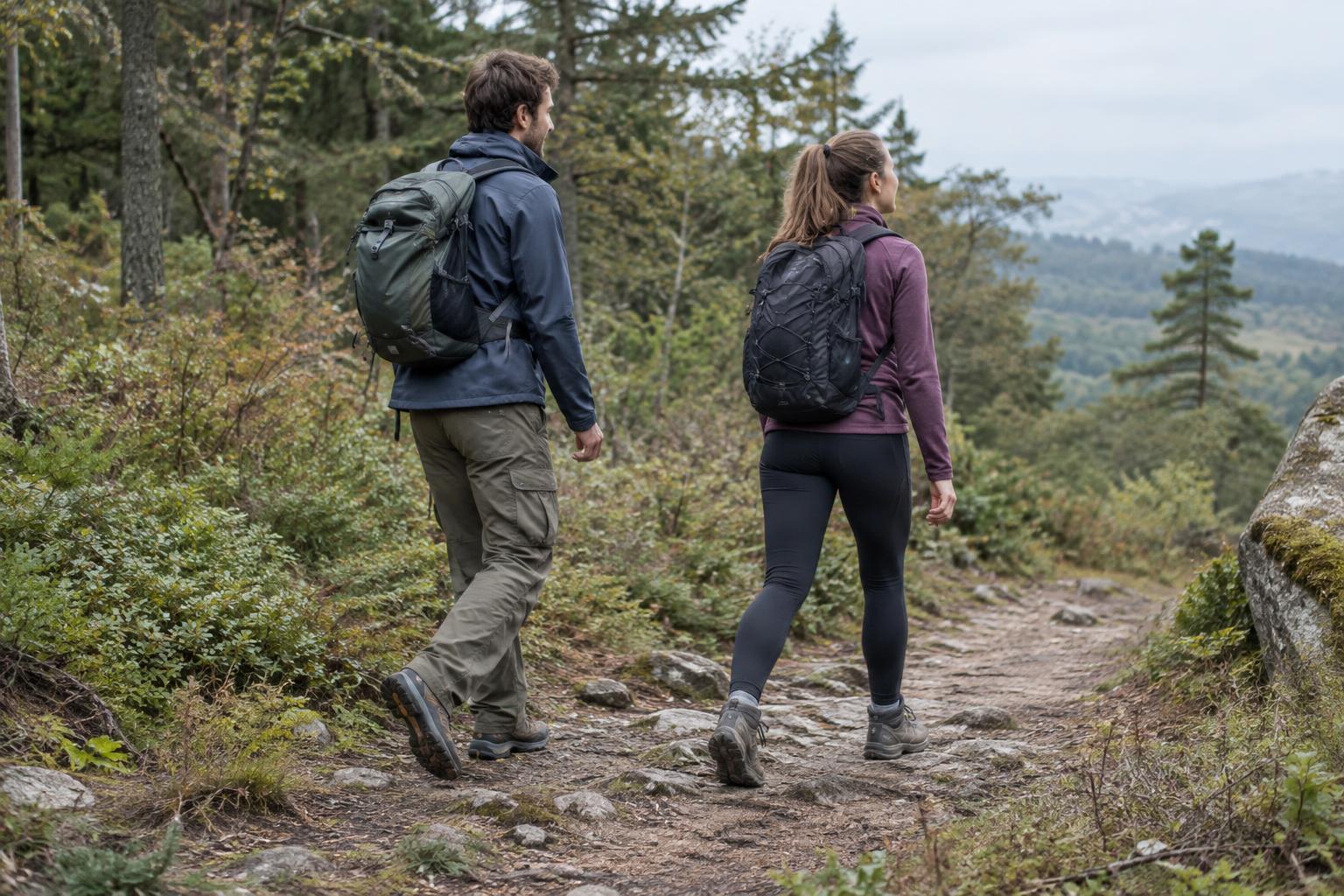
If you expect to walk steadily, avoid wearing so much insulation that you sweat heavily. Moisture from inside your clothing can leave you chilled when you stop, even if the rain stays out. Start with a comfortable base layer, add a light insulating layer when needed and use a shell for wind or rain. Opening zippers or removing a layer early is often easier than trying to dry a soaked jacket later.
Try the whole layering system on before you travel. You should be able to move your arms freely with a base layer underneath and a shell over the top. Check whether the hood fits comfortably, the cuffs close around your wrists and the hem stays in place when you reach forward. Pockets that remain accessible under a backpack strap can be more useful on a day trip than an especially small packed size.
Make the choice you can care for
Choose down if you value low bulk, expect cool and mostly dry conditions, and can reliably keep the jacket protected from sustained rain. Choose synthetic insulation if dampness is hard to avoid, drying opportunities are uncertain, or you want a layer for mixed walking and stopping. For especially wet trips, a lighter insulated jacket paired with a dependable rain shell is often more flexible than one very warm jacket.
Whichever you choose, follow the garment’s care label. Air out a damp jacket when you reach shelter, wash it as directed and make sure it is fully dry before storing it. Avoid leaving insulation tightly compressed for long periods between trips. Simple care helps a jacket keep its loft, so it is ready to warm you on the next chilly morning.