The appeal of an umbrella on an easy walk
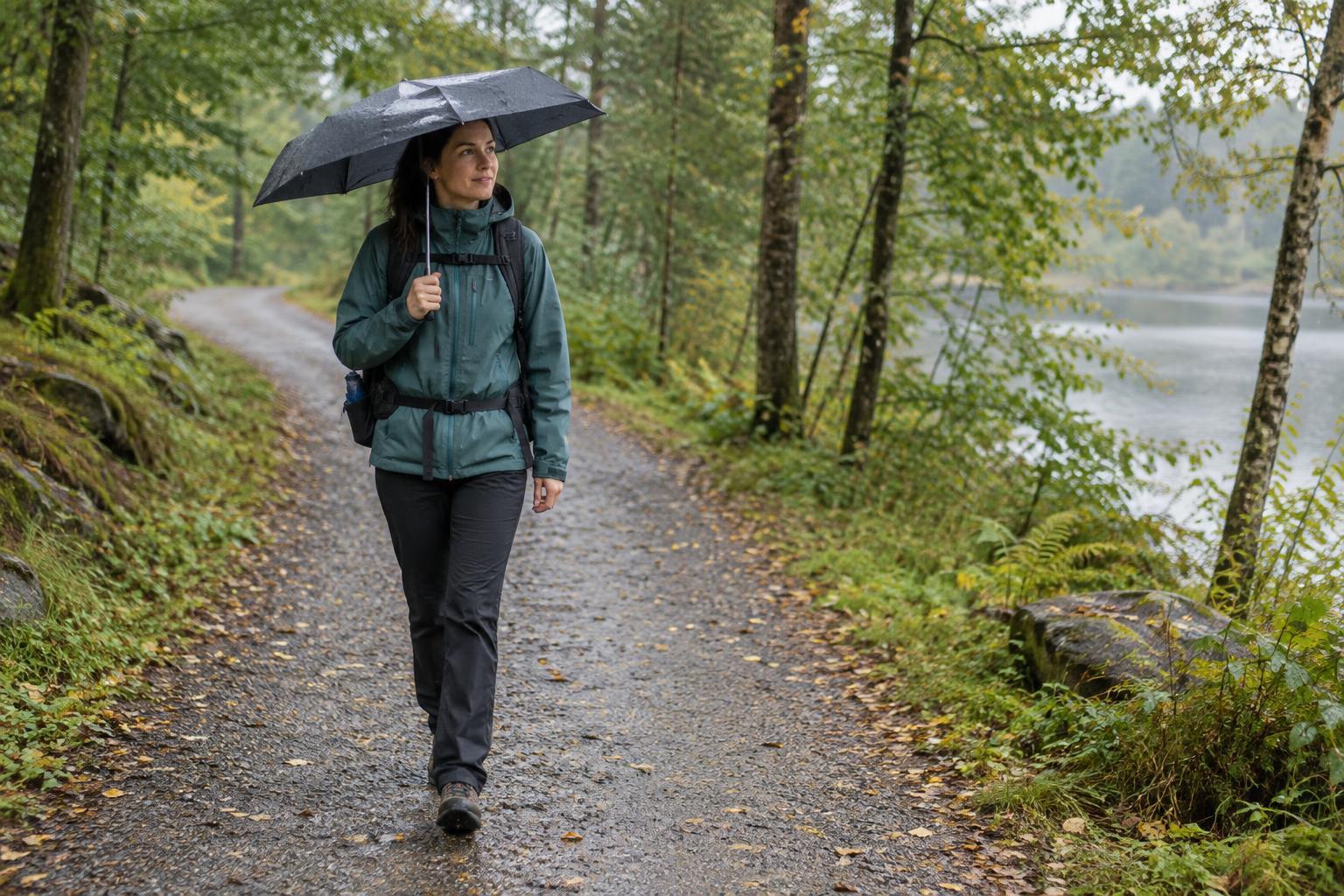
A compact umbrella earns its place on a walk when rain is likely but conditions are otherwise gentle. On a town path, park loop or broad, well-maintained trail, it can keep rain off your face and upper body without making you feel as enclosed as a hood might. It also gives you a quick way to cover a map, phone or snack during a short stop. If the shower passes, you can fold it away rather than continuing to wear a damp outer layer.
It is most convenient on a short outing where you can adjust your plans easily. A light umbrella may fit in a bag’s side pocket and be ready before you have time to put on a jacket. That convenience is the main reason to bring one—not the expectation that it will handle every kind of weather.
Check the route, not just the forecast
Before packing an umbrella, picture the walking space. Wide paths with room to pass other people are a better match than narrow trails edged with branches. In a crowded area, an open canopy can obstruct someone’s view or put its tips close to their face. Close it when passing through tight spaces, entering a building or boarding transport, and give others room when you stop.
The ground matters too. An umbrella occupies a hand that you may need for a railing, trekking pole or steadying yourself over uneven surfaces. On steps, slick rock, muddy slopes or stream crossings, secure footing should take priority over staying dry. If you expect to use both hands often, a hooded rain jacket is usually the more practical main layer.
Know when to put it away
Wind is the clearest limit. A compact umbrella can turn inside out or pull against your hand in gusts, especially in open fields, coastal areas and exposed viewpoints. Even if the frame survives, holding it at the right angle may become tiring and distracting. Pack it away rather than struggling to keep it open, and rely on clothing that leaves your hands free.
An umbrella is also a poor choice during a thunderstorm. It does not provide protection from lightning; if thunder is audible, follow appropriate storm-safety guidance and seek suitable shelter rather than continuing an exposed walk. Heavy rain can be another reason to switch plans: windblown water may reach your legs and bag despite the canopy, while runoff can make the route difficult underfoot.
Pair it with clothing that can stand alone
Think of the umbrella as an optional addition to a walking kit, not its entire rain plan. A water-resistant or waterproof outer layer, chosen for the conditions you expect, lets you keep moving if the umbrella becomes awkward. A brimmed cap under a hood can help keep rain out of your eyes. Shoes with dependable grip and a way to protect items inside your bag may matter more than extra canopy coverage.
The combination can be comfortable in mild, steady rain: use the umbrella when the path is open and the air is calm, then fold it when the trail narrows or the wind rises. On a longer walk, make sure everything you need still works with the umbrella packed away. That simple test prevents a small accessory from becoming essential to finishing the route.
Choose and carry one with care
For walking, look for a compact umbrella that you can open, close and grip easily. Check that its folded length fits your bag and that its cover will contain drips after a shower. A larger canopy may offer more coverage, but it also takes up more space around other walkers and catches more wind. No compact model removes those trade-offs.
After use, keep a wet umbrella away from clothing and electronics if possible, then open it to dry when you reach a suitable place. Do not pack it away wet for longer than necessary. The best decision is often a modest one: bring an umbrella for a calm, accessible walk where it will make light rain more pleasant, but be ready to leave it closed when the route or weather asks for both hands.