What gaiters do on a trail
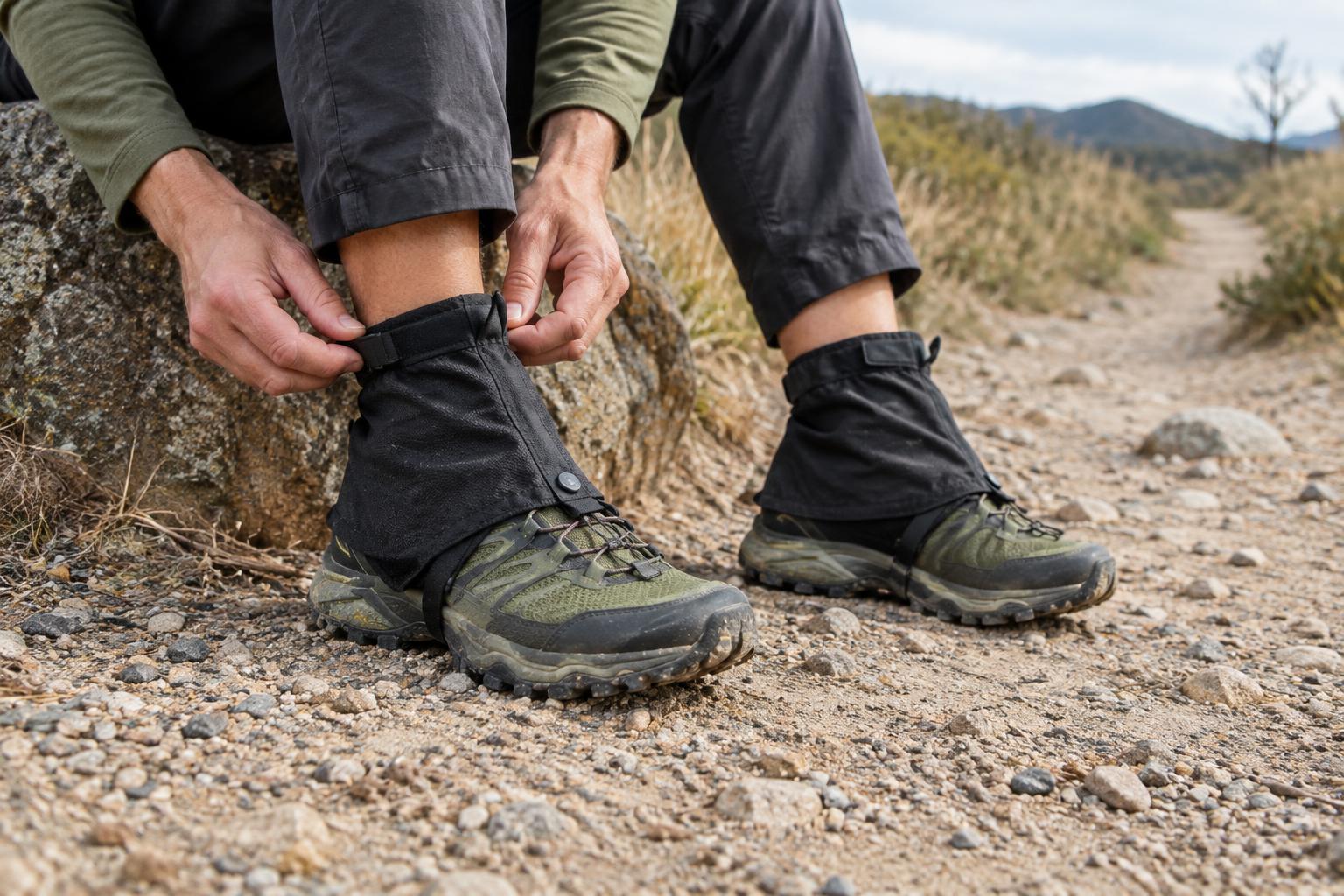
A trail gaiter is a fabric cover that sits around your ankle and overlaps the top of your shoe. Its main job is to block the opening where sand, small stones, dry leaves and other loose material can fall in. That can be especially useful on gravel paths, dusty tracks and walks with repeated stretches of loose ground.
Gaiters are not a substitute for well-fitting shoes or careful footing. They will not make a low shoe waterproof, and water can still enter from above or through the shoe itself. For most recreational day walks, the best gaiter is one that stays in place without making your feet noticeably hotter or getting in the way of your stride.
Match the height to the conditions
Low gaiters usually reach just above the ankle. They are a practical starting point if your main concern is grit getting into trail shoes. Their smaller coverage tends to feel less bulky, and they are easy to carry for walks where you may only need them on certain sections. Choose a shape that overlaps the shoe opening all the way around; a narrow cuff that leaves a gap at the sides may let debris through.
Taller gaiters cover more of the lower leg and are better suited to brush, deeper mud or wet vegetation. That extra coverage also means more fabric and a more involved fit. If you mostly walk maintained paths and want to stop pebbles rather than protect your shins, a tall pair may be more than you need.
Material matters alongside height. A light, flexible fabric can be comfortable for warm, dry outings, while a sturdier fabric may suit rough ground and frequent contact with plants. No single fabric offers every advantage: more coverage and heavier construction may improve protection in some conditions but can feel warmer during an easy summer walk.
Check the seal against your shoes
Before choosing a size, look at how a gaiter attaches to the footwear you actually use. Many low gaiters have a front hook that catches a lace and a rear attachment that connects to the heel of the shoe. Some use an underfoot strap instead. Rear attachments may require a compatible point on the shoe or an added fastening patch, so check what is included and whether you are comfortable attaching anything to your footwear.
Try the gaiters on with your walking socks and shoes. The upper edge should sit close to your ankle without pinching, and the lower edge should cover the shoe opening when you stand, bend your ankle and take a few steps. Check the sides and heel for gaps. A pair that looks snug while you are standing still may ride up as you walk.
Also inspect where any strap passes beneath the shoe. It should sit securely without bunching underfoot or dragging excessively on the ground. Underfoot straps can wear with use, particularly on hard surfaces, so a replaceable strap is worth considering if you expect to walk on mixed terrain.
Look for closures you can manage easily
Gaiters may close with a zipper, hook-and-loop strip, elastic or a combination of fastenings. There is no universal best choice: what matters is whether you can put them on correctly and adjust them without a struggle. If you often pause to empty your shoes or change socks, a closure you can open and reseal quickly may make the gaiters more useful in practice.
Check that the closure lies flat and that the fabric does not pull apart when you flex your foot. Elastic should hold the gaiter in place without leaving an uncomfortable pressure point. If you are shopping in person, walk around and climb a step if possible. When buying without a try-on, use the maker’s sizing guidance and check its footwear compatibility rather than relying on your usual shoe size alone.
Test and maintain them before a longer walk
Wear a new pair on a short local walk before taking it on a full day trip. Notice whether the front hook stays attached, whether the heel edge lifts and whether either gaiter twists around your ankle. Small adjustments to the position or tension may solve those problems; persistent gaps usually point to a poor match with the shoe or the wrong size.
After a gritty outing, shake out the gaiters and brush loose dirt from the closures and attachments. Let them dry before storing them, and follow their care label if they need washing. Inspect straps, hooks and seams occasionally. A gaiter that fastens securely and covers the shoe opening is more valuable than one with extra features that never quite fits.