Start with the hat you actually wear
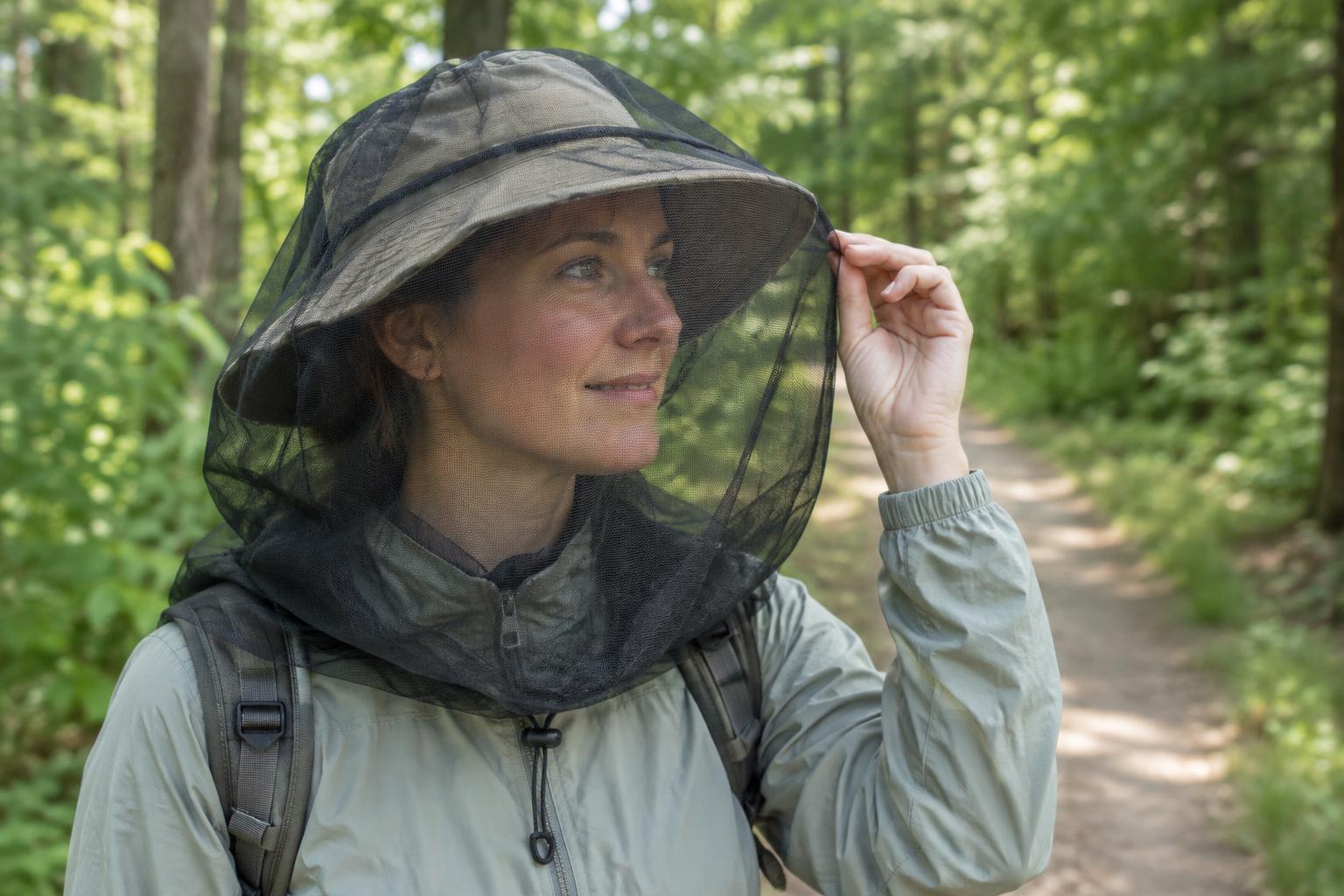
An insect head net is easier to live with when it fits over your usual walking hat, not just over your bare head. A cap brim can hold mesh away from your eyes and nose, while a wide-brimmed hat may create more space around your face. Either can work, but the net needs enough room to cover the hat without being pulled tight across its edges.
When comparing nets, look beyond labels such as “one size.” Consider the width of your hat brim, the height of its crown and whether you wear sunglasses. A net that looks roomy in a package may feel cramped once it covers all three. If you can try it on, wear your full setup and turn your head from side to side. The mesh should not press against your nose or sweep across your glasses every time you move.
Check the shape and length
Some head nets hang loosely from the top of a hat; others use a shaped panel or a light hoop to create space in front of the face. A simple draped net packs small and has little structure to manage, but it depends more on your hat to keep the mesh off your skin. A structured design may feel roomier around the mouth and eyes, though it can take up more space in a bag.
Length matters as much as width. The lower edge should reach below your chin and give you a practical way to close gaps at the neck. Try looking up, looking down and reaching forward as you might on a path. If those movements pull the net above your collar, insects may find a way in. Extra length can be tucked into a collar, but so much loose fabric that it catches on straps can be distracting.
Look through the mesh before you buy
A head net should help you pay attention to the trail, not make every step harder to judge. Look through the mesh in daylight if possible, including toward both bright and shaded areas. Notice whether its color or pattern interferes with your view and whether the material sits far enough from your eyes. Clear vision is especially important if you expect uneven ground or frequent route-finding.
Finer mesh can help keep smaller insects out, but mesh also needs to allow comfortable airflow. Rather than relying on appearance alone, check that the material matches the insects you expect to encounter and that you can breathe and see comfortably while wearing it. Keep in mind that no net is useful if you regularly lift it because it feels too close or stuffy.
Test the closure with your walking layers
The opening at the bottom may use a drawcord, elastic or a loose edge intended for tucking in. Whatever the design, it should be easy to arrange without leaving an obvious gap. Try it with the jacket, shirt collar or neck layer you would wear outdoors. A closure that works over a thin T-shirt may sit differently against a raised rain-jacket collar.
Aim for a secure fit without cinching the cord uncomfortably against your throat. Check that you can turn your head, drink water and adjust a backpack strap without dragging the lower edge out of place. If a cord has a small toggle, see whether you can operate it with the gloves you commonly carry. Comfort during ordinary movements is a better guide than how neatly the net looks when you stand still.
Make the final choice practical to carry and care for
For a day-trip kit, a net should be simple to find and quick to put on when insects become bothersome. A small storage pouch can keep mesh from snagging on keys, zippers or other gear. Before packing, check the seams, the point where a cord enters the hem and any rigid parts. Small snags or awkward fittings can become more noticeable after repeated use.
After a trip, shake out debris and follow the maker’s care guidance before storing the net dry. Avoid stuffing it against sharp objects, and inspect it for holes before your next outing. The best choice is not necessarily the lightest or most elaborate model: it is the one that fits over your hat, stays comfortably in place and lets you keep your attention on the walk.