Start with a quick inspection
A folding camp chair picks up more than visible dirt. Grit can collect where the frame moves, damp fabric can stay folded for days, and small signs of wear may go unnoticed until the chair is opened again. Before cleaning, set it up on level ground and look over the seat, back, feet and joints. Note any bent tubes, loose fasteners, torn stitching or fabric pulling away from its attachment points.
Check how the chair opens and closes without forcing it. If a joint catches, look for trapped sand or a twisted fabric panel rather than pushing harder. Stop using a chair with a cracked frame, a failing joint or a seat that no longer holds securely. Cleaning can improve a sound chair’s condition, but it cannot make a damaged frame safe.
Remove loose dirt before washing
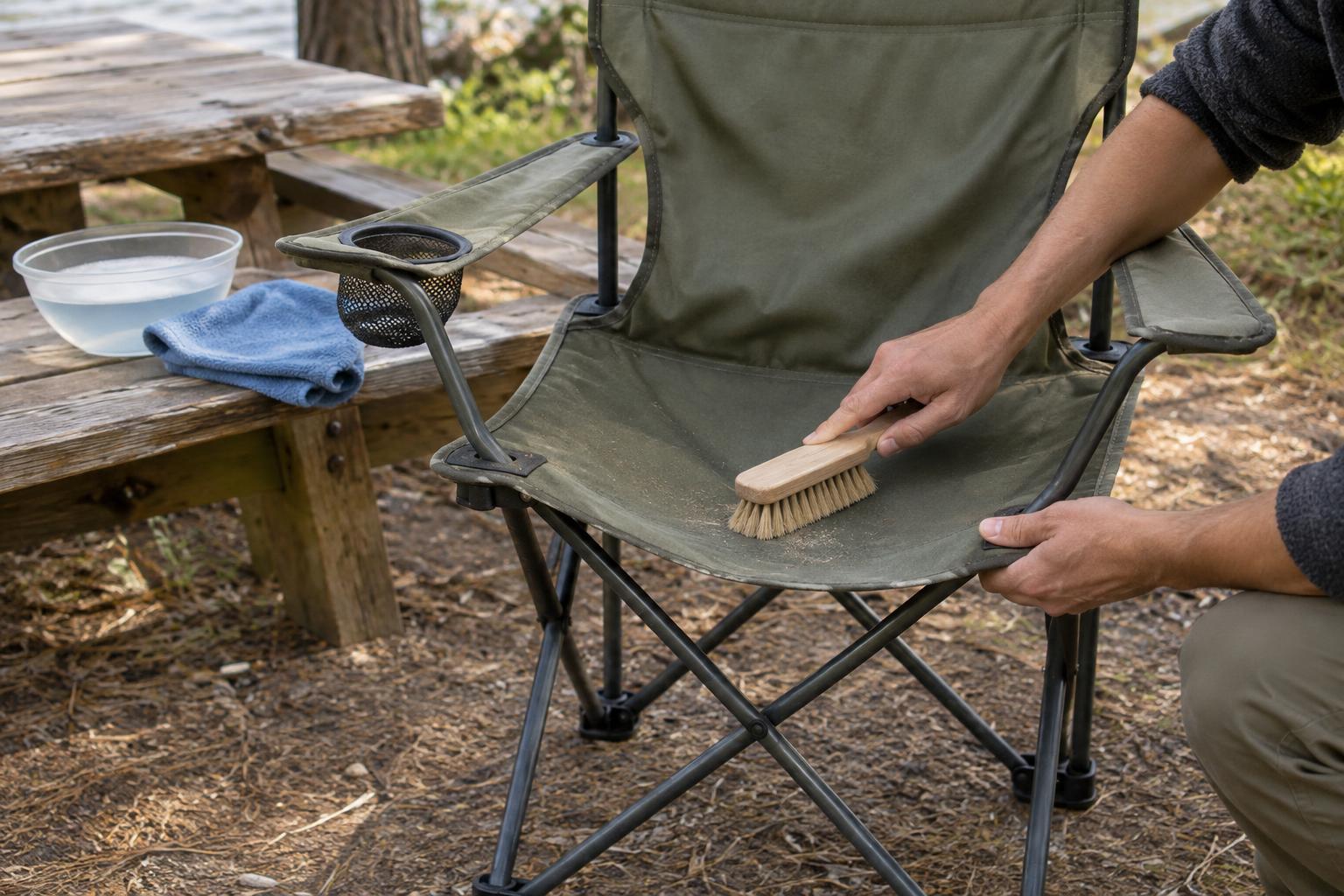
Brush dry mud, leaves and crumbs from the chair before adding water. A soft brush or cloth works well along seams, beneath the seat and around cup holders. Turn the chair gently to shake grit out of corners, taking care not to trap your fingers in the folding mechanism. If it came with a carry bag, empty and brush out the bag too; otherwise, clean fabric will go straight back into a dusty cover.
Pay particular attention to the lower frame and feet, where soil and sand tend to accumulate. Wipe exposed tubes with a damp cloth, then use a soft brush around hinges and crossing points. Avoid driving grit deeper into a joint with a high-pressure spray. If the chair has removable feet or other parts, take them off only if the maker’s instructions allow it and you can refit them securely.
Clean the fabric gently
For most routine dirt, a cloth or soft brush, lukewarm water and a small amount of mild soap are enough. Test an inconspicuous patch first, especially on coated or brightly colored fabric. Work over the seat and back without soaking padded sections, then wipe away soap with a clean damp cloth. A stiff brush, bleach or strong solvent may damage fibers, finishes or stitching.
Treat stains while they are accessible, but resist aggressive scrubbing. Blot up fresh spills, then clean the affected area from the outside toward the center. Mesh panels and cup holders can be cleaned with a soft brush and wiped thoroughly. If the chair has a removable fabric seat, follow its care label rather than assuming it can go in a washing machine.
Check joints, fasteners and feet
Once the chair is clean, open and close it slowly to check for rough movement. Remove any remaining grit with a dry brush or cloth. Do not automatically oil every joint: lubricant can attract dirt or stain the seat, and some mechanisms are intended to run dry. If the manufacturer recommends lubrication, use the specified type sparingly and wipe away any excess before packing.
Look for missing screws, loose rivets, worn plastic connectors and feet that no longer grip the ground. Tighten user-serviceable fasteners only as directed; overtightening can damage a fitting or restrict a folding joint. Replace worn parts with compatible ones where available. If a rivet, weld or load-bearing connector is failing and you cannot arrange an appropriate repair, retire the chair rather than relying on a makeshift fix.
Dry fully and store without strain
Leave the chair open in a ventilated place until its fabric, seams, pockets and frame joints are completely dry. Water can hide in cup holders and inside folds even when the seat feels dry. Keep it away from intense heat that could affect plastic parts or coatings. Dry the carry bag separately before putting the chair back inside.
For longer storage, choose a dry place where the chair will not be crushed under heavier gear. Fold it according to its design, checking that no fabric is pinched in the frame. Keep the bag loosely packed if space allows, and avoid leaving the chair wet in a vehicle or shed. Before the next trip, open it once more to confirm that the frame moves freely and the seat remains securely attached.