Start with the meal you actually want to carry
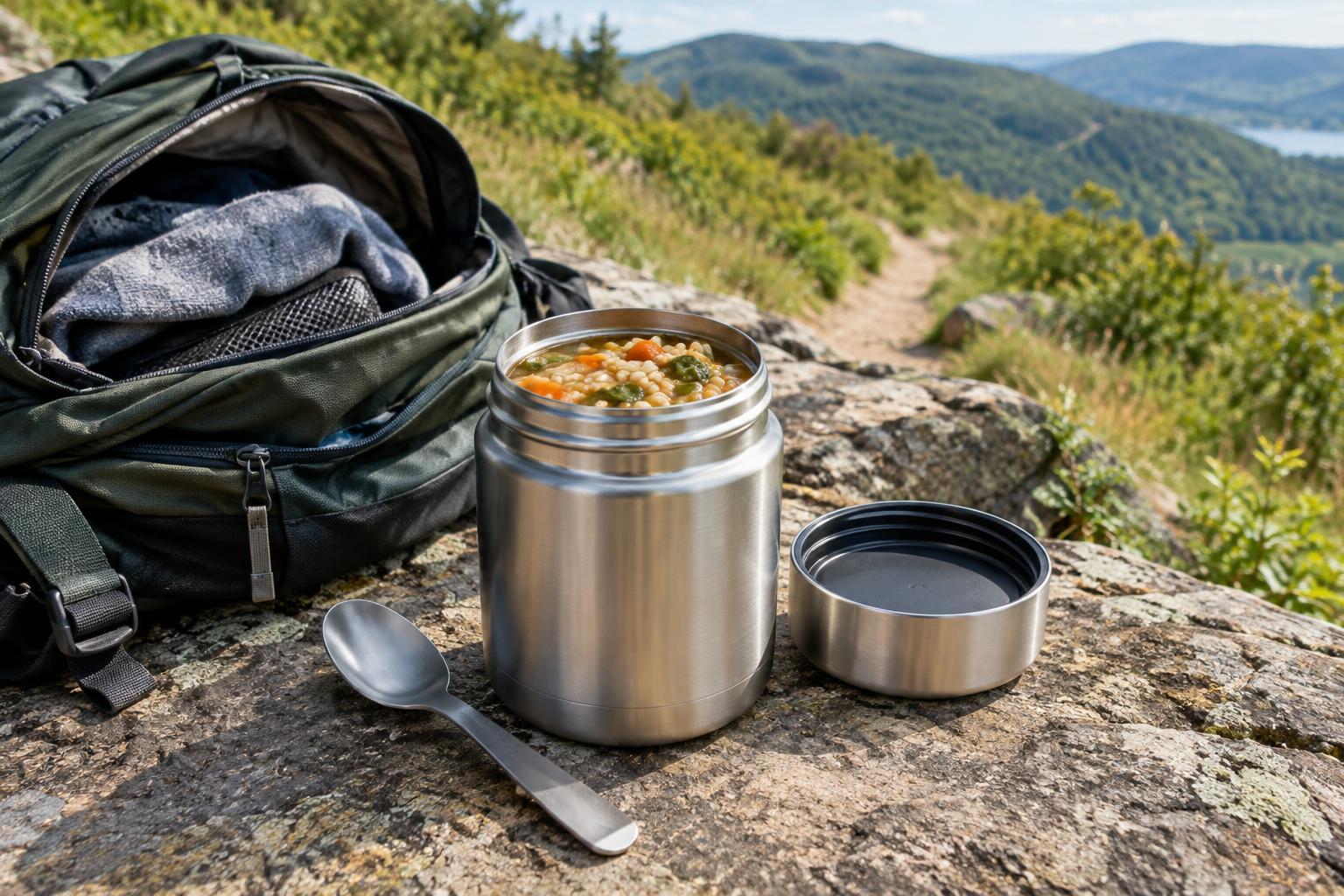
An insulated food jar is useful when you want lunch ready to eat without searching for a café or assembling a meal outdoors. Soup, stew, porridge and pasta can all be convenient choices, but they place different demands on the jar. A thin soup is easy to pour through a narrow opening; a chunky meal is easier to fill and eat from a wide one. Before choosing a jar, picture where you will stop and whether you plan to eat directly from it.
Capacity deserves a practical test rather than a guess based on the outside dimensions. Think about your usual portion and any extras you carry separately, such as bread or fruit. A jar that holds far more than you need takes up valuable bag space, while an overfilled jar leaves no room to fit the lid securely. If you often pack food for two people, separate jars may be easier to share and carry than one large container.
Compare openings, lids and packability
A wide opening makes it easier to add thick food, reach the bottom with a spoon and wash the jar afterward. The trade-off is a bulkier lid, which may take more room in a small daypack. Check the shape as well as the stated capacity: a tall, narrow jar might fit a bottle pocket, while a shorter one may sit more securely inside the main compartment. Neither shape is universally better; it depends on your bag and the way you like to pack.
Look for a lid you can grip and turn comfortably, especially if you expect to open it with cold or damp hands. Some jars include a folding spoon or a lid that doubles as a bowl. Those features can be handy, but only if they are easy to use and clean. A separate spoon may be simpler. If possible, check that the seal is removable for washing and straightforward to put back in place. An insulated jar is still worth carrying upright inside a bag, away from items that would be damaged by a leak.
Weight also matters once the jar is filled. Before leaving for a long walk, try carrying it on a shorter outing. That small test can reveal whether it fits your pack, rattles against other equipment or feels heavier than you expected.
Fill it with the journey in mind
Follow the manufacturer’s instructions for preparing the jar. Many insulated jars are designed to be warmed with hot water before hot food is added, or cooled before cold food is packed. Empty the preparation water first, then fill the jar with food at the temperature you intend to serve it. Work on a stable surface, take care with hot contents and close the lid fully without forcing it.
Insulation slows temperature change; it does not keep food at a fixed temperature indefinitely. Plan your meal around the length of the trip and the conditions you expect, and follow ordinary food-safety guidance for ingredients that need careful temperature control. If you are unsure whether a particular meal will travel well, choose a less perishable option instead. Packing a napkin, your preferred utensil and a small bag for used items makes an outdoor lunch tidier.
Place the jar where it will not be crushed or roll around, and keep it separate from clothing and electronics. A simple pouch can contain minor drips and stop the outside of the jar from scraping other gear, though it is no substitute for a properly closed lid. If your day trips sometimes begin with a motorcycle ride before the walk, browse Wybór i użytkowanie motocykla · Motocykl od Podstaw for more on that part of the journey.
Make cleaning part of the routine
After lunch, remove as much leftover food as you can and close the jar for the journey home. Wash it according to its care instructions, paying attention to the lid threads and seal, where food can collect. Let every part dry fully before reassembling and storing it. Leaving the lid off during storage can help avoid trapping moisture or lingering smells.
A good food jar is one you will happily use and clean again. Match its size to a familiar meal, make sure you can open and wash it without difficulty, and check that it has a comfortable place in your bag. Those everyday details often matter more than extra features when lunch is just one part of a day outdoors.